





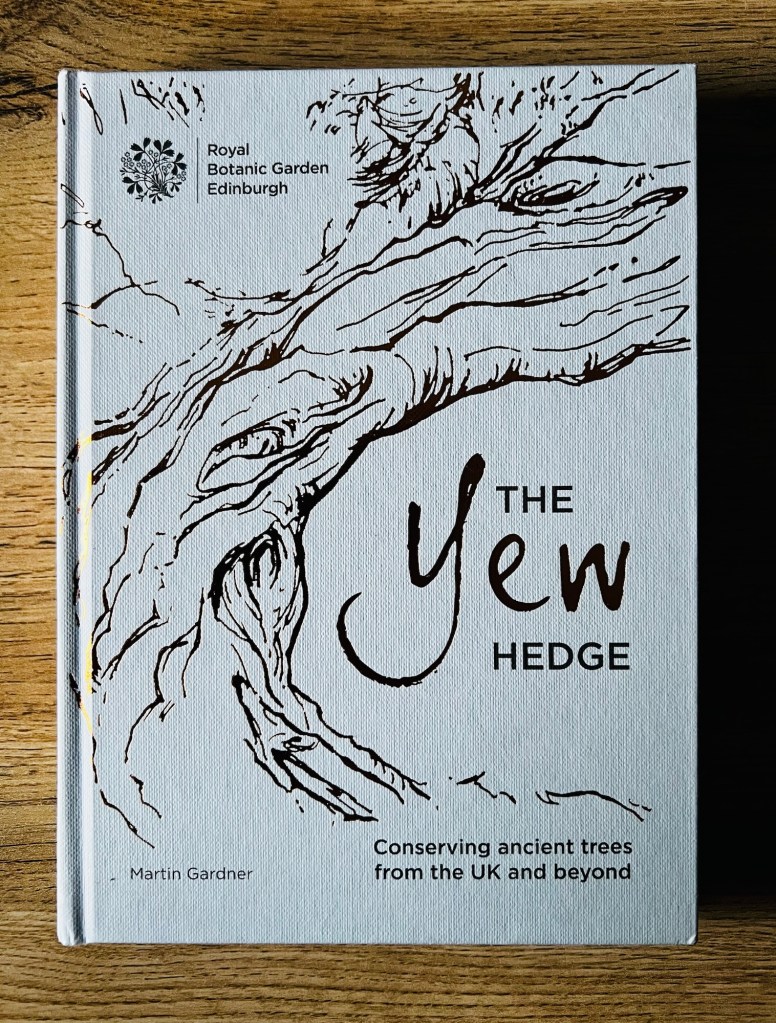
I found this beautiful book at the weekend quite by chance. The Yew Hedge written by Martin Gardner in association with the Royal Botanic Garden, Edinburgh, published in hardback and charmingly illustrated by artists Jacquie Epstell and Sharon Tingey is a study of the ancient yew trees of Great Britain and Europe.
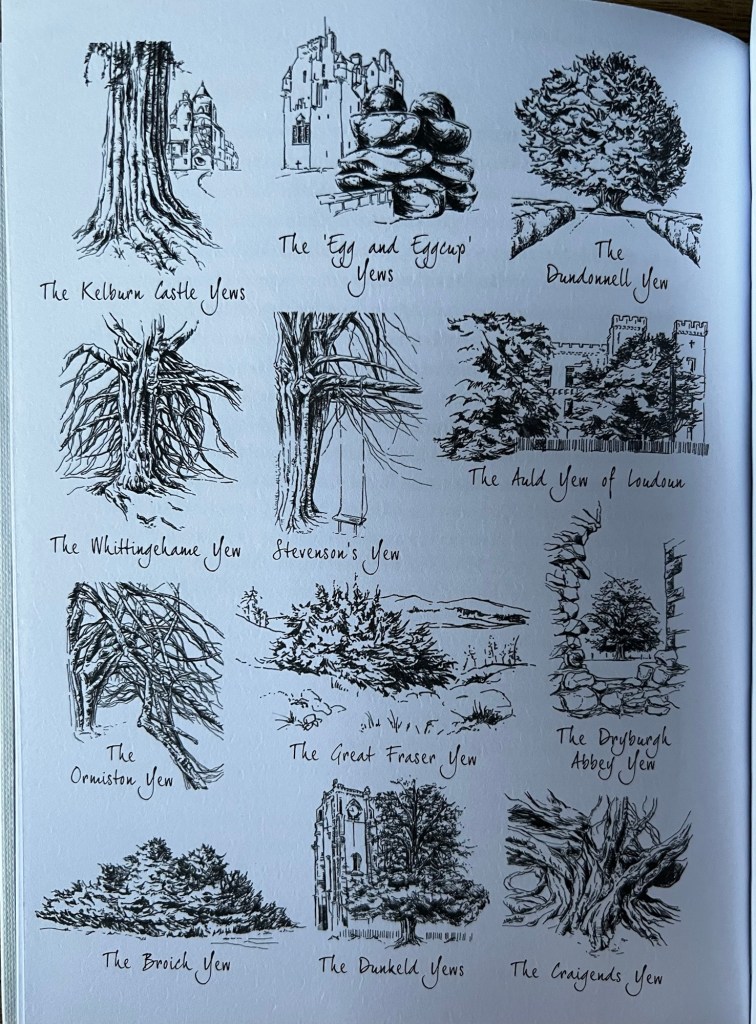
Yew trees are notoriously slow to grow and so the sheer size of these trees featured in the book is quite staggering. With that of course, comes a deep passage of time and a palpable sense of history. Each of the trees in the book will have its own unique story and importance to its community especially as they were often grown on the sites of important pre-Christian places of worship.
The Yew was seen by our earliest ancestors as a gateway tree between this world and the next, it symbolised life and death and rebirth as the branches of the tree grow downwards and into the ground to create new life by growing back into separate but joined trunks.
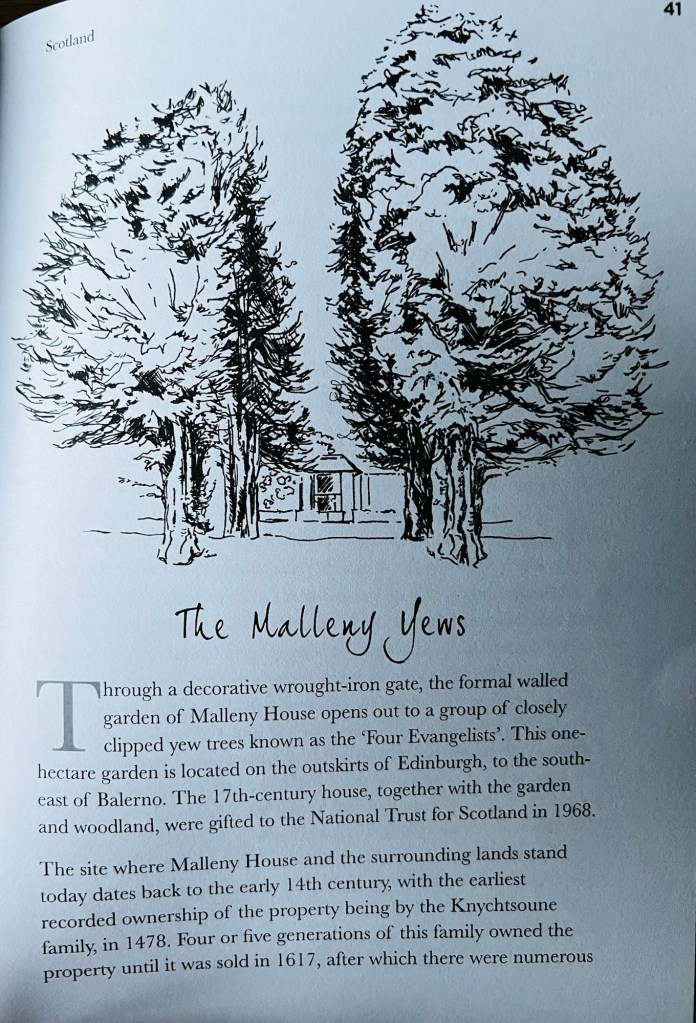
This book beautifully illustrates the connection between ourselves and the yew trees of these lands, they were, at the time of the longbow archers hugely important for the making of their bows with vast quantities being shipped in from Spain in particular. The Royal Botanic Garden Edinburgh details each of these most remarkable trees with a background to their history, location and folklore.
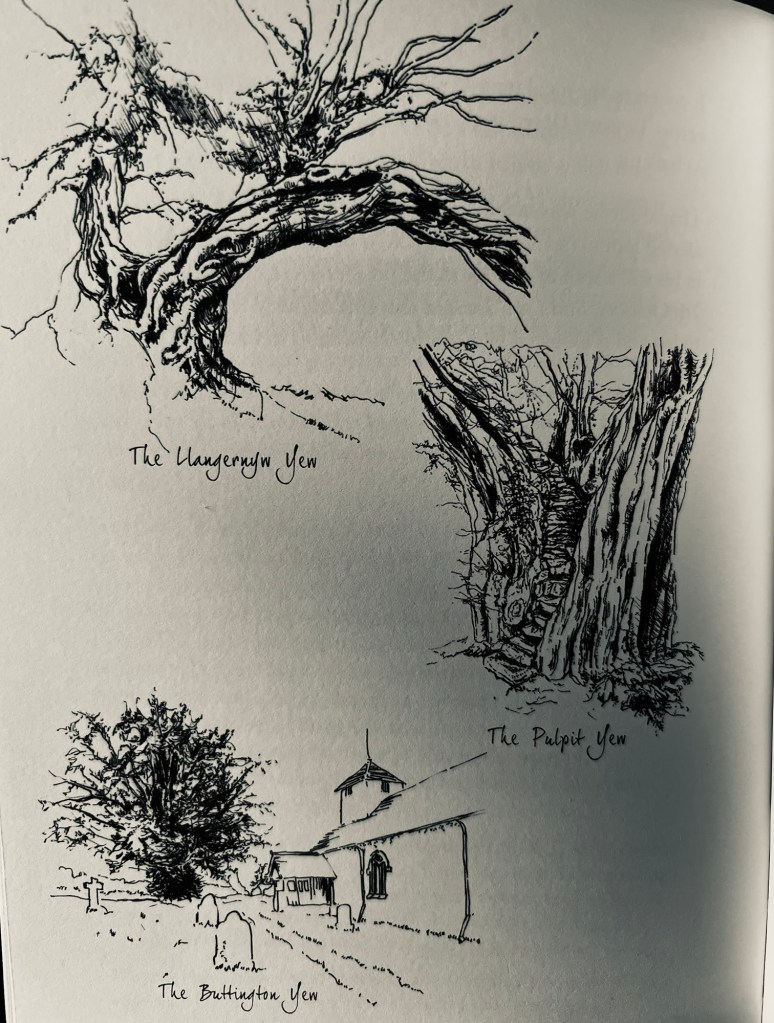
Ancient yews are most often found on the sites of old churches and deserve at least a passing nod of recognition from us. That they have survived for so long and stood witness to so much is testament to their existence.
The illustrations capture their unique beauty, powerful multi layered trunks with poisonous foliage used in the treatment of cancer, they grow and contort according to their environment. I am fortunate to live near a grove of ancient yews sat within a Commonwealth war graves site and it is hard to imagine a tree more suitable for the place.
Yews are not classed as ‘ancient’ until they reach nine hundred years of age but there are many fine examples of ones half that age which is remarkable in itself. To stand beside one and consider what it has seen under its canopy over the centuries is a truly special thing to do.


 retroculturati