

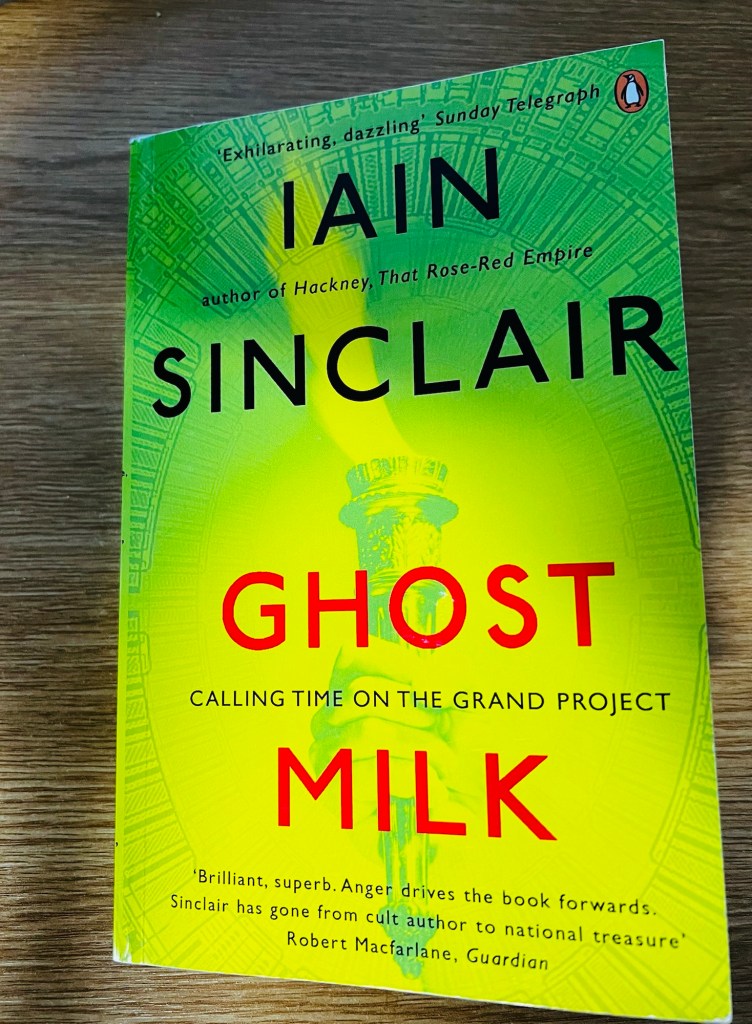
“Ghost Milk: Calling Time on the Grand Project” is the latest addition to my Iain Sinclair collection. The book centres around the redevelopment of London and particularly for the 2012 Olympics and, unsurprisingly, Sinclair makes profound and scathing comments around the planning and execution of the project. In typical Sinclair fashion he merges memoir and psychogeography, with social commentary to explore the impacts of these huge projects on the city’s landscape its culture, and communities.
Sinclair, a long-time resident of Hackney in East London, uses the Olympic developments as a focal point to study the broader themes of urban regeneration and consequently the erasure of its local history. Those of us familiar with his writing will know how close to his heart this is and how his writing meanders through linked themes and characters of forgotten stories. Sinclair is these people’s champion, lest we forget the ‘twitchers, allotment holders, dowsers and edgeland wanderers’
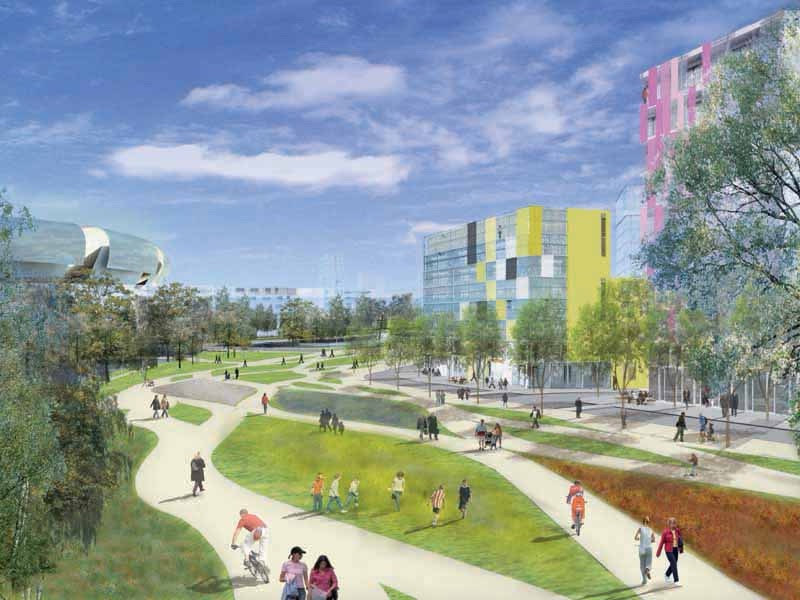
He laments the loss of community and historical authenticity in the name of progress. He criticizes how the Olympics have been used to justify the displacement of local cultures and to impose a new, sanitized version of London that caters more to global tourism and corporate interests than to its residents. This sanitisation of people and place has spread far beyond the Watford Gap and there is much in that which Sinclair rails against that strikes a chord with non- city dwellers.
And Sinclair goes beyond the Gap, up to Manchester, across and down the M62 to Hull and across the North Sea to Berlin. In typical fashion he skips from one place or subject to another often leaving the reader wondering where he is leading us.
Ghost Milk shows how politics, both local and national, shapes our towns and cities, highlighting the bitter irony in projects that claim to ‘regenerate’ areas but end up marginalizing those who live there, pushing them out into the edgelands, a ‘clearing of the decks’. And what are we left with? Soulless, sterile places where social cohesion becomes ever more consigned to the history books.
Sinclair was well placed to write this book, his footfall has left an imprint over much of the city for decades, he has born witness to the changes the city and other places have undergone from the mid 1970s to the present and we would do well to heed his words before it really is too late.
Categories: The Reading Room


 retroculturati