





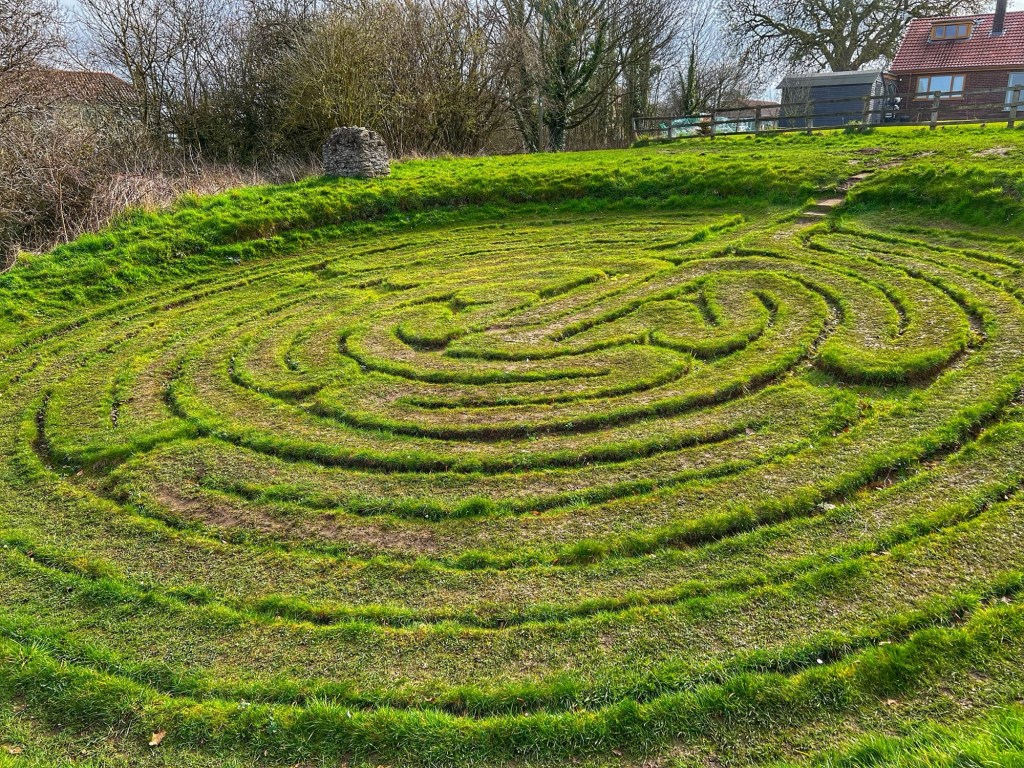
I recently found this wonderful spot whilst exploring the edges of my home county.
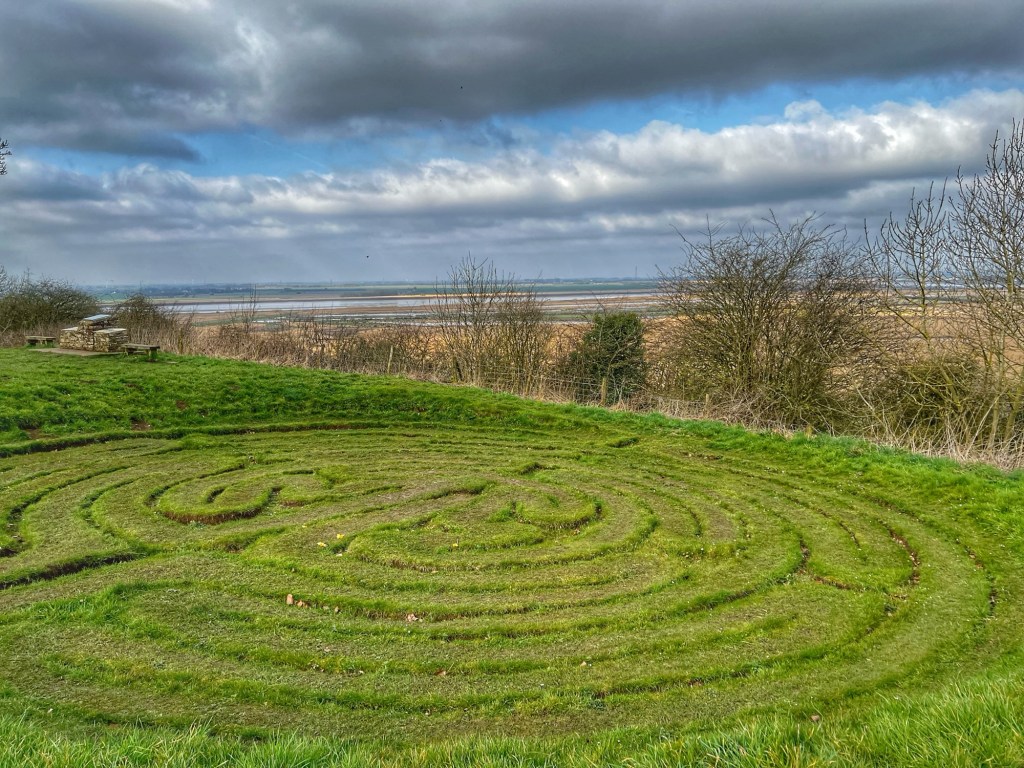
Julian’s Bower is a fascinating and unique attraction in the village of Alkborough, North Lincolnshire. At first glance you would be forgiven for thinking it is a maze without walls or hedges but it is actually an ancient turf labyrinth—a single, winding path carved into the grass that leads to the centre and Julian’s Bower is one of the few remaining examples of its kind in Britain.
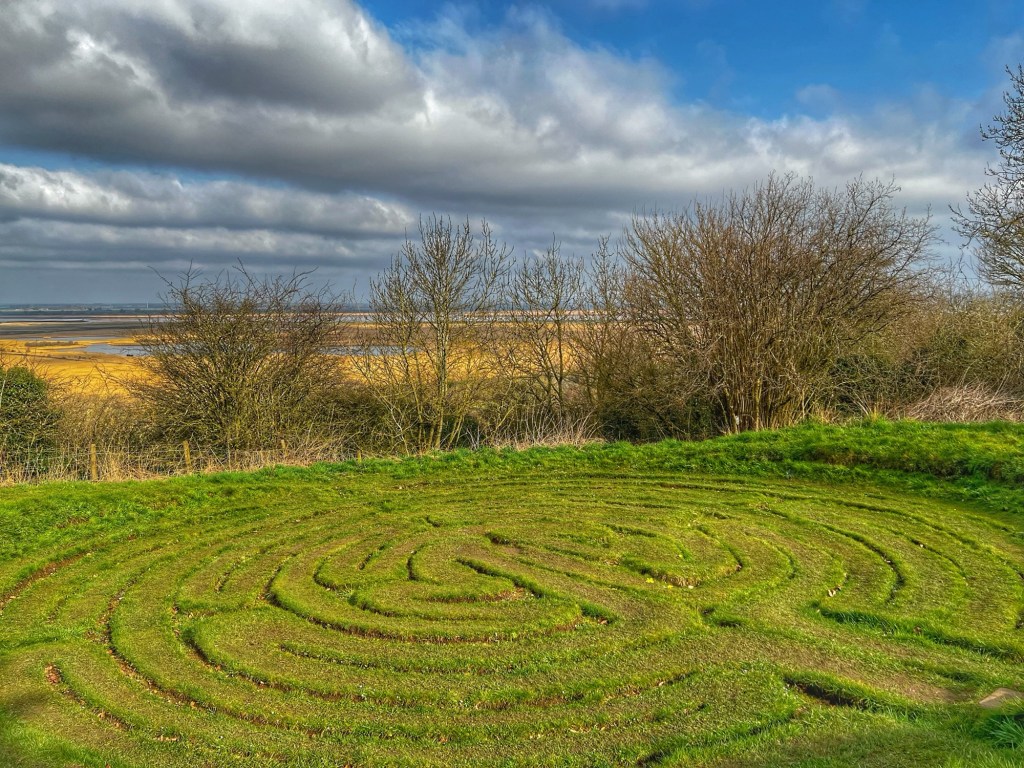
Easily found off the main through road, from the labyrinth you can see the confluence of three rivers: the Humber, Ouse, and Trent. There is also a lovely church close by. Whilst it is quite small walking it is apparently quite surprising- some quarter of a mile to the centre! I preferred to admire it from the edge along with the beautiful view of the flatlands behind it.
The first written record comes from 1697, when the antiquarian Abraham de la Pryme suggested it might date back to Roman times. However, it’s more widely believed to be medieval, possibly created by Benedictine monks who lived in Lincolnshire until the early 13th century. Some intriguing theories propose it was carved as penance by a knight linked to the murder of Thomas Becket, while others connect its name—“Julian’s Bower,” a term used for turf mazes in medieval England to Julius of Troy.
Some might find it underwhelming because of its size but to stop and truly consider its history makes it worth the trip. That anything could survive for so long, particularly made of earth is remarkable. I couldn’t help but try to hear the laughter of those who have played on it for centuries.
Categories: British History and Folklore, Uncategorized


 retroculturati