





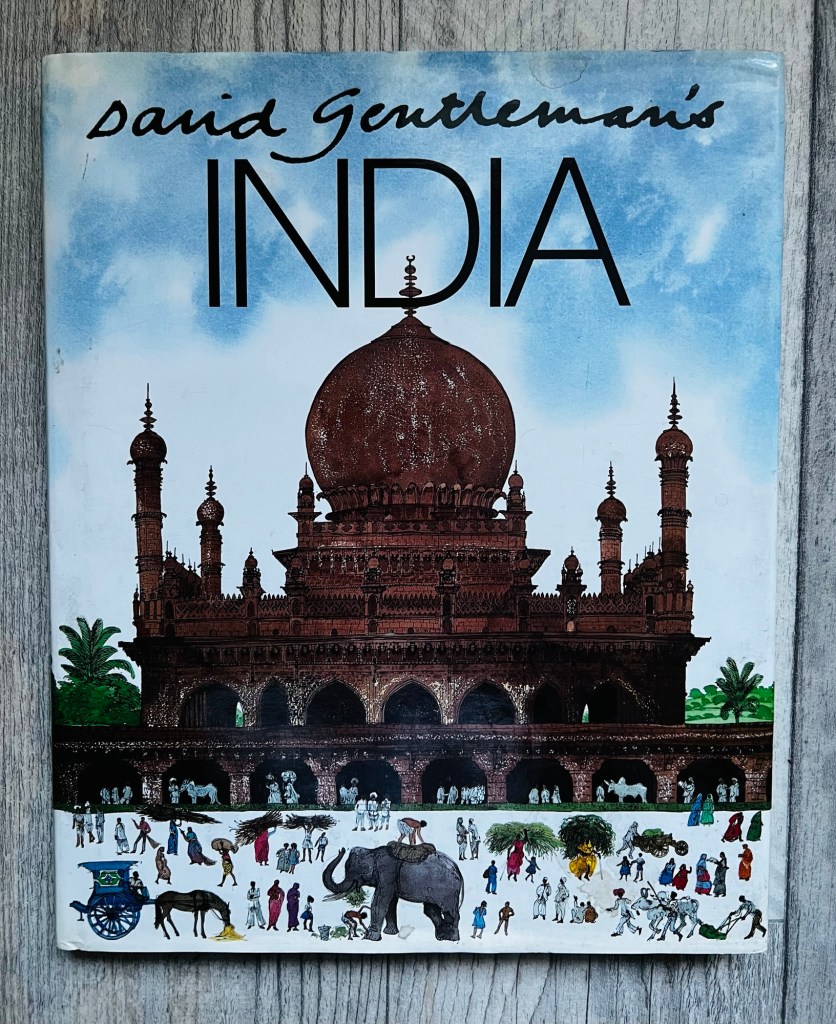
David Gentleman’s India was the fifth book in a series of art based travelogues by the artist David Gentleman. First published in 1994 by Hodder & Stoughton it followed his remarkable books on Britain, London, Paris and the British coastline.
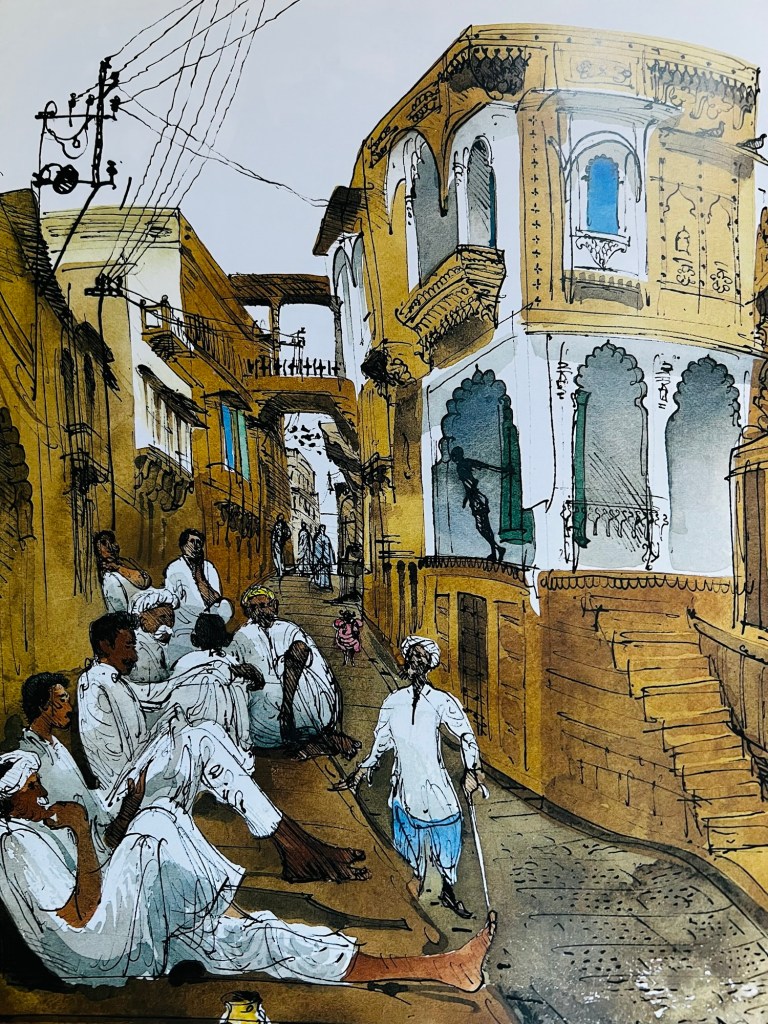
This follows the same large format edition of the others and is full of beautiful illustrations throughout as well as Gentleman’s own perspective on the country at large and those regions he visited. India is, by definition a huge project to record artistically and Gentleman does not disappoint. From Delhi to the Himalayas, Rajasthan and Central India to Calcutta, Madras to Goa and finally Bombay we are given a unique look at the country from the eye of the artist.
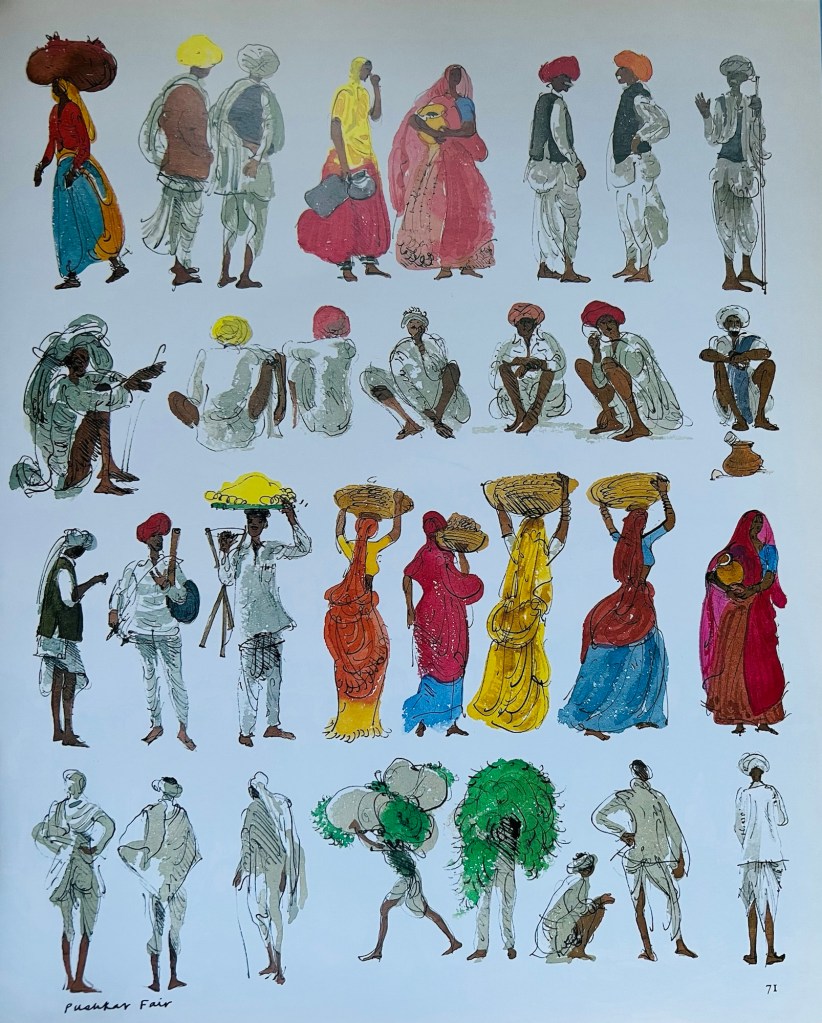
As with all of his work, Gentleman showcases a variety of styles and techniques throughout the book. From the incredibly detailed to simple, on the spot reportage sketching. I find his style irresistible, he has long said the beauty of art is that you really have to look at the subject and this is apparent in the make up and feel of the book.
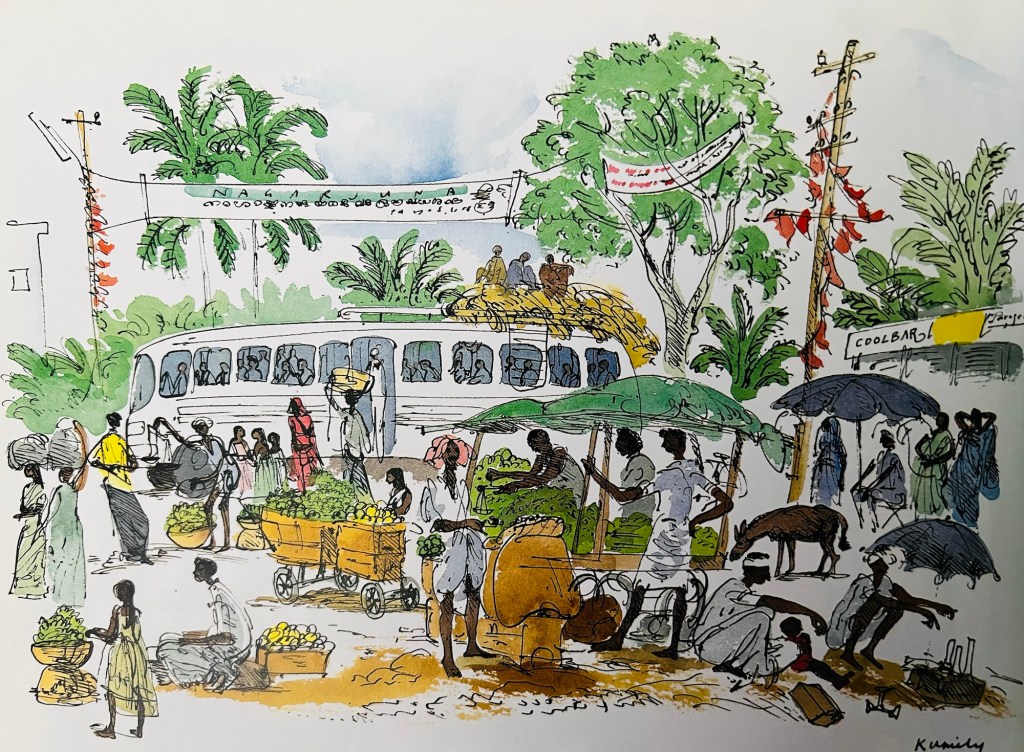
Gentleman first travelled to India in the Sixties and despite it being ‘much more expensive’ he felt guilt at being so much better off than the vast majority of the people living there. He is frank in his changing feelings during his time there; ‘from fascination and elation to exhaustion, panic and despair’.
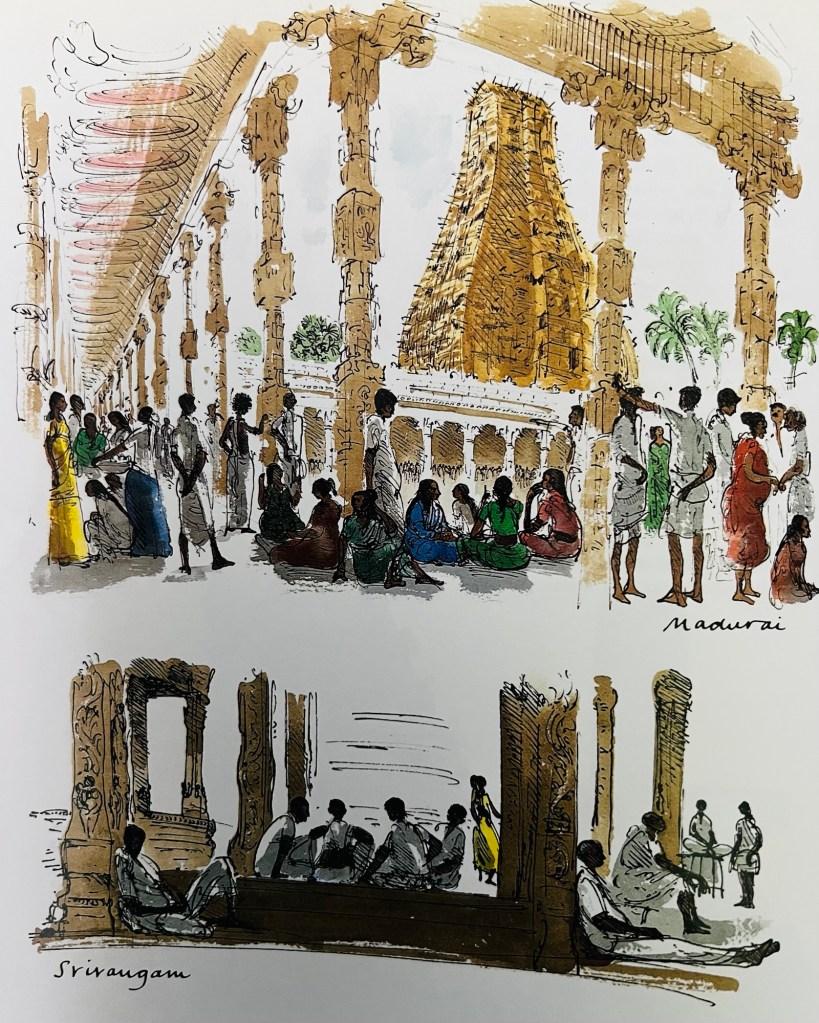
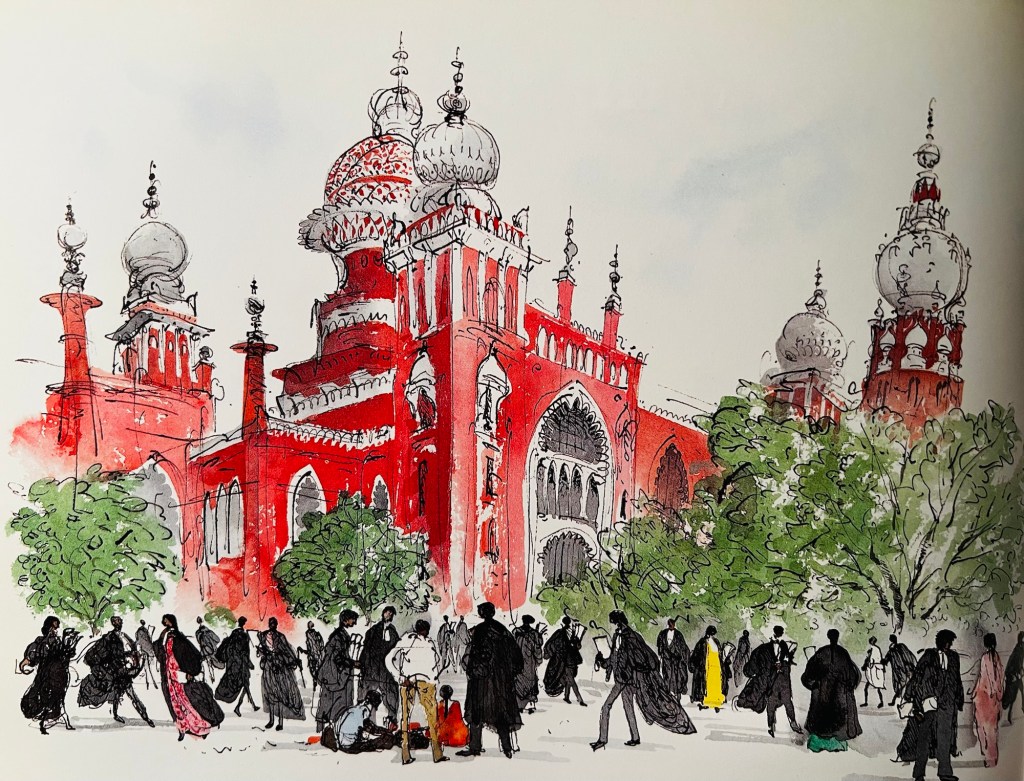
India is a fascinating place to ‘people watch’ and Gentleman is clearly in his element, he perfectly captures the way and pace of life from selling wares in markets to congregating at the local temple. ‘ The morning scene is delightful as lawyers arrive grandly by car or taxi, put on their legal robes- black silk over sober pinstripe or brilliant saree- and chat and meet clients, or buy legal stationary from the vendors sitting on the ground’.
Gentleman’s art, like India itself, is full of contrasts. Each page effortlessly combines the old with the new, the rich with the poor, peace and chaos. Every larger piece demands close attention, there is so much going on and he manages to capture and convey detail without the need for fine art techniques and his trip to the Taj Mahal perfectly illustrates his range and eye..
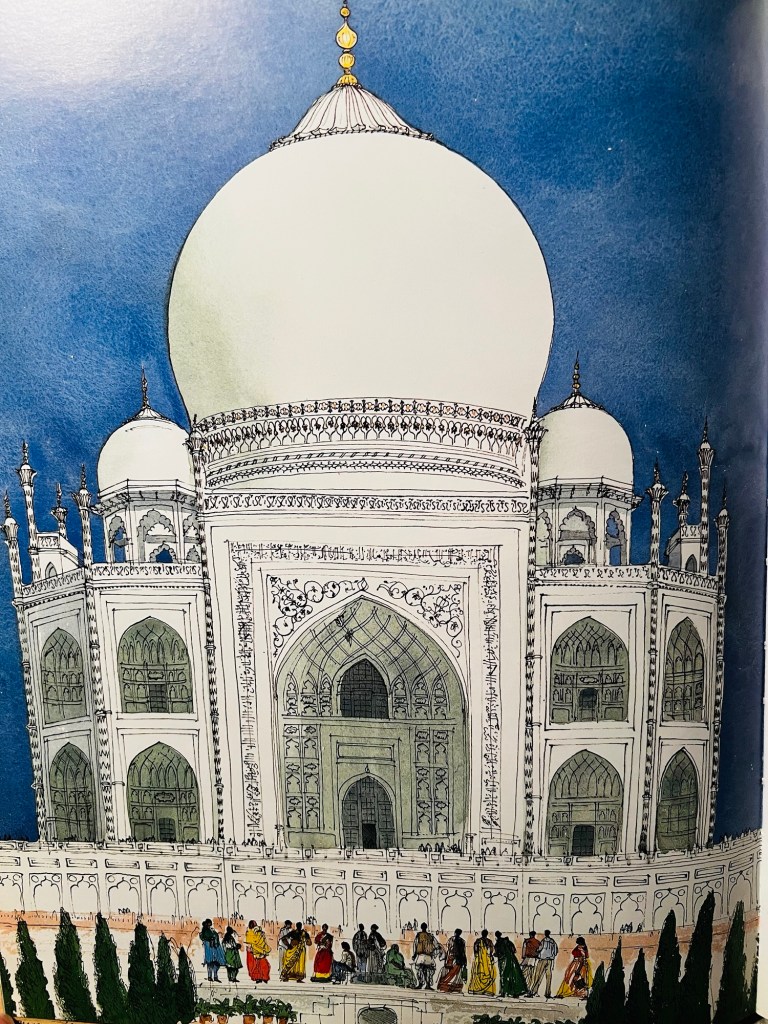
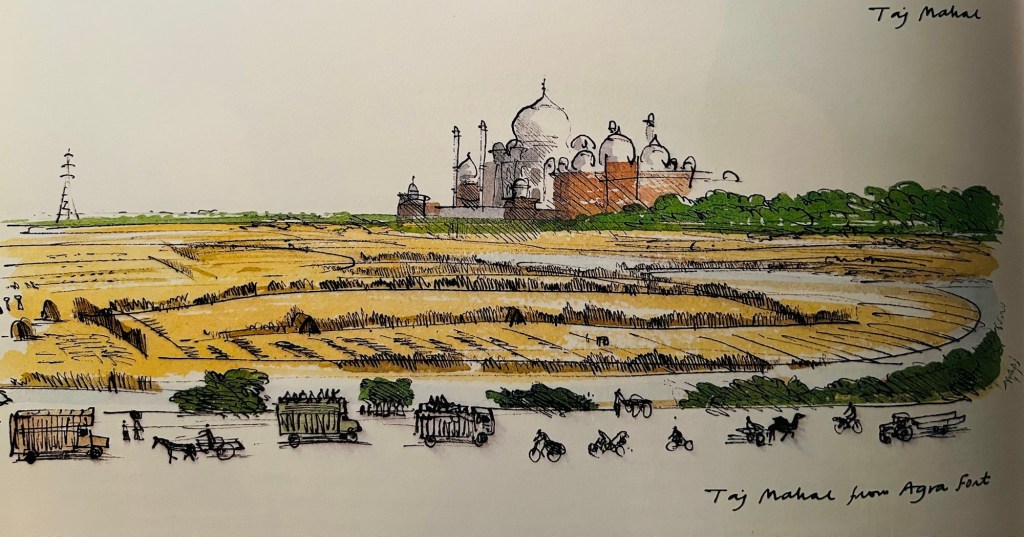
These two paintings show how he manages to capture scale in two completely different ways; the first is the classic view we all know with the people at the front to give not just a real time perspective of the size of the Taj but also a sense of the beautiful intricacy of the architecture. The second, and my favourite is designed to show the reader how it appears from afar. This very simple outline painting taken from the Agra Fort really gives the reader the sense of awe anyone must feel as they approach it and again the contrast of the opulence of the building with the trucks packed with people, animals and, or goods, the horse and cart, the promise of another backbreaking day.
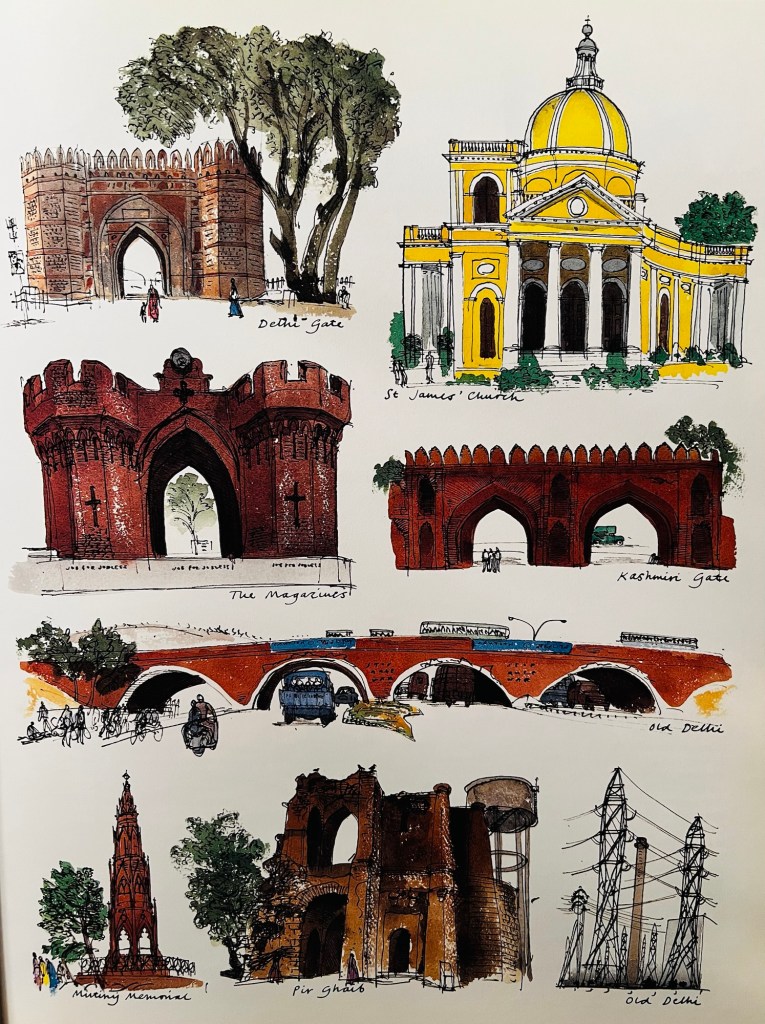
As always, Gentleman gives an honest account of what he has observed, for him India is too vast and complex to be given a single verdict. He sees unfairness and the divide between rich and poor becoming ever greater with the middle class on the up and the poor heading further in the opposite direction. He makes a comparison with Europe and offers a warning they would do well to heed: ‘India is most beautiful where it is catching up. The prettiest things there are those that remind us of our simpler past; the saddest are those that repeat mistakes that in Europe we have already made’
This is the best book I have read on India since James Cameron’s wonderful James Cameron’s ‘An Indian Summer’
See also:
David Gentleman’s In the Country
Categories: David Gentleman, The Reading Room


 retroculturati