
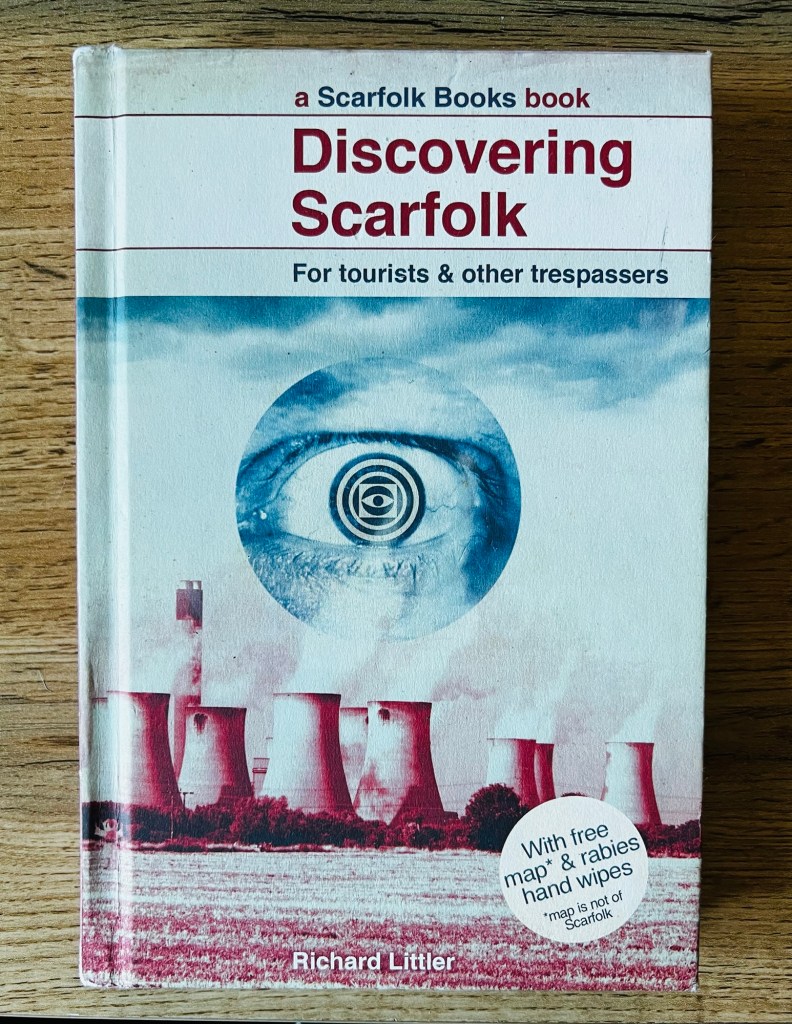
Richard Littler’s remarkable Scarfolk project takes the reader back to the weird and wonderful decade of the 1970s where folklore and hauntology meets the grim public awareness campaigns of the era.
Scarfolk is a town ‘somewhere in the North West of England’ and a place forever locked in a 1970s time loop of which there is seemingly no escape!
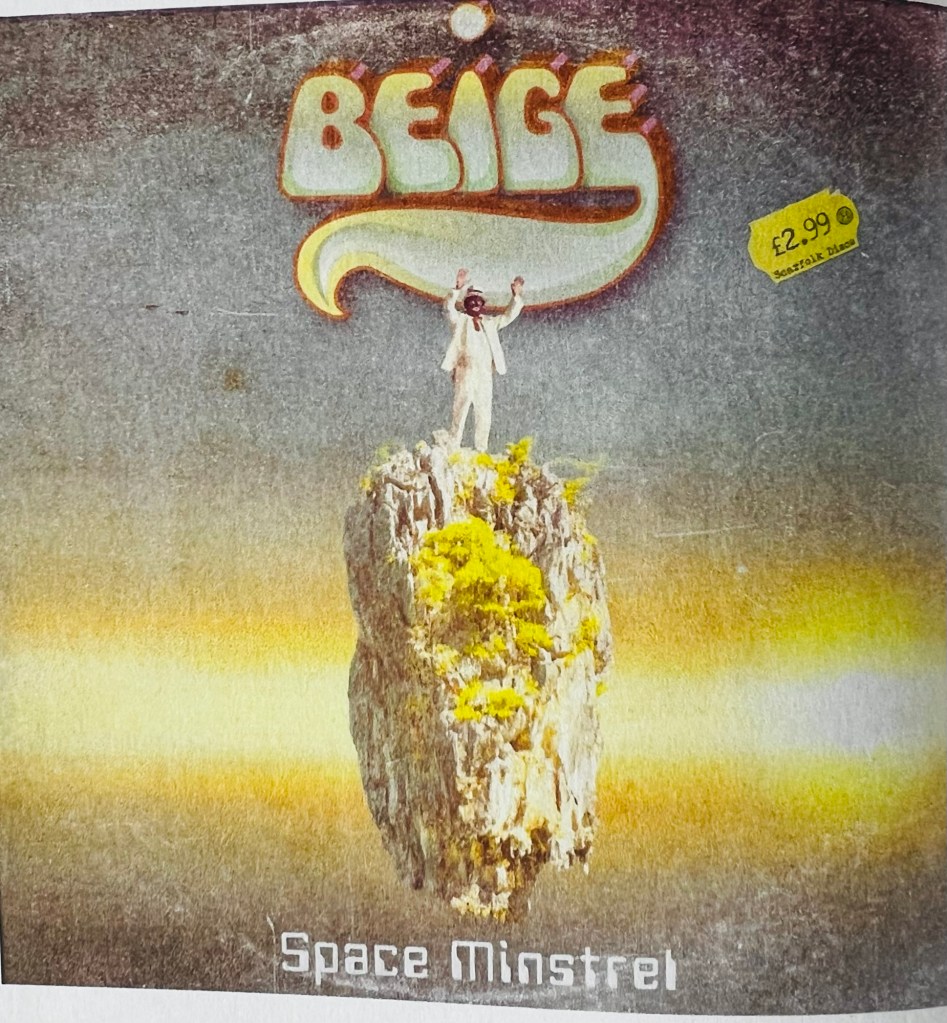
For those of us of an age to remember the seventies, Littler’s brilliant play on advertising and public service announcements are a pleasant reminder of the era. The album cover above for the group Beige is a brilliant take on the default colour of the decade, no home or car interior escaped beige!
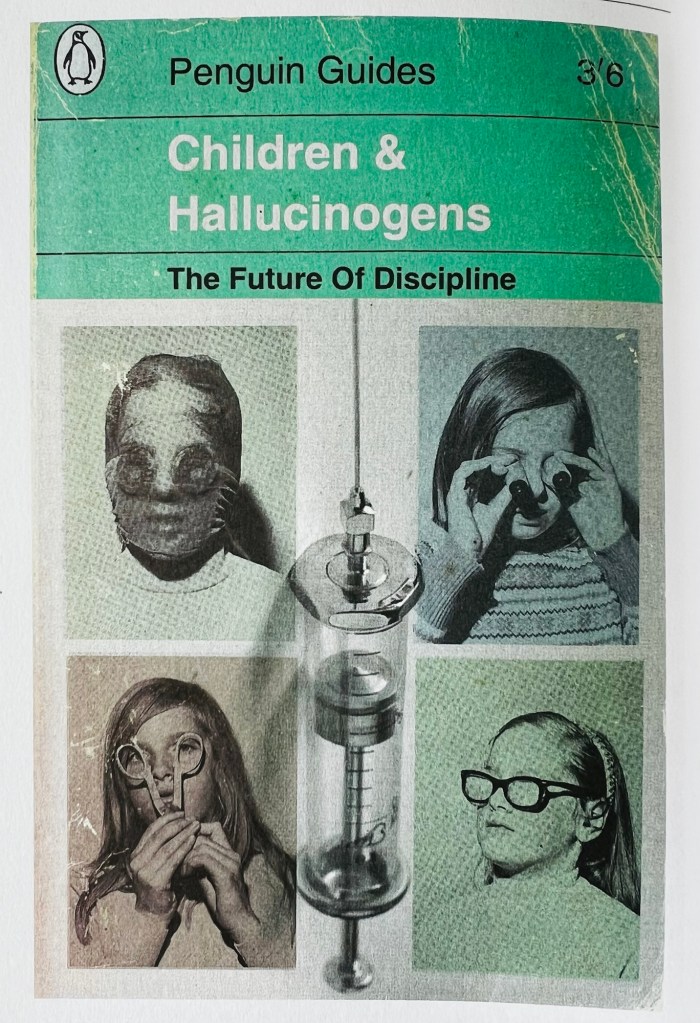
The 1970s was a decade which didn’t give too much consideration to the possible delicate nature of a child’s mind when it came to television programming. The creepier the better seemed to be the mantra of writers and producers and again, this is not lost on the author.
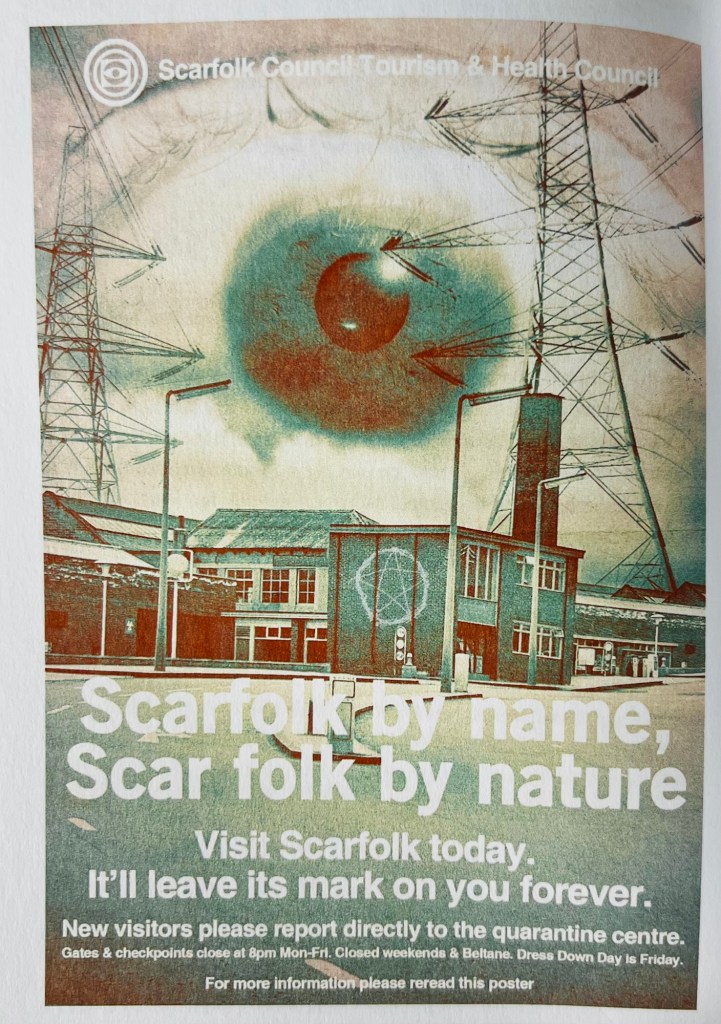
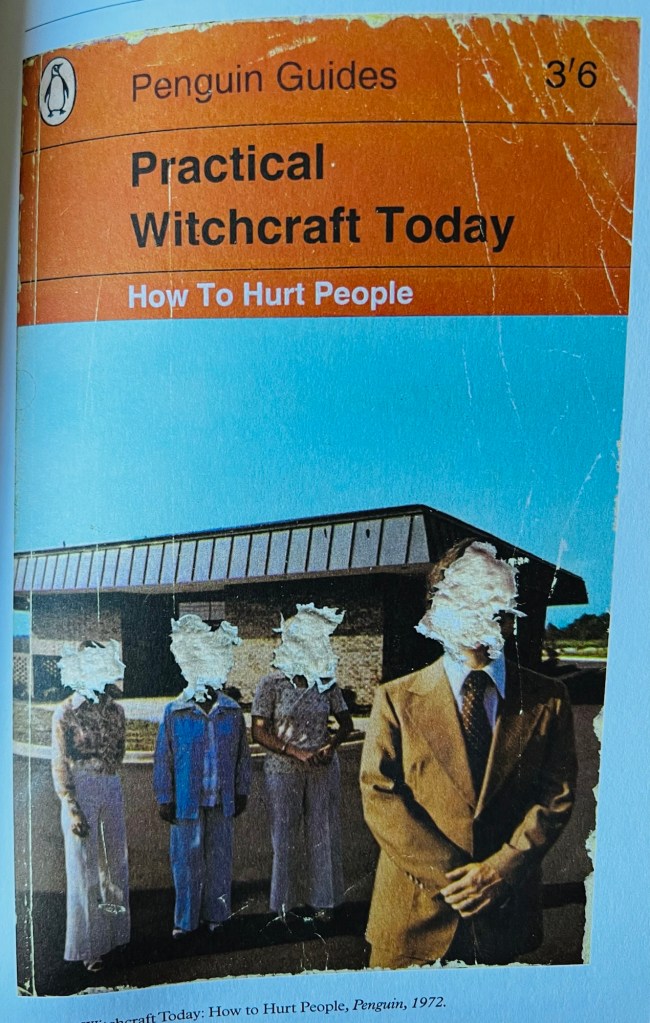
I particularly like his take on the Penguin book covers and especially those rather severe Pelican non-fiction books with the blue covers and stark monochrome photographs. Littler’s versions are not for the faint hearted but do give the younger reader a sense of how uncensored Britain was in its media and general attitude to what the public could ‘take’.
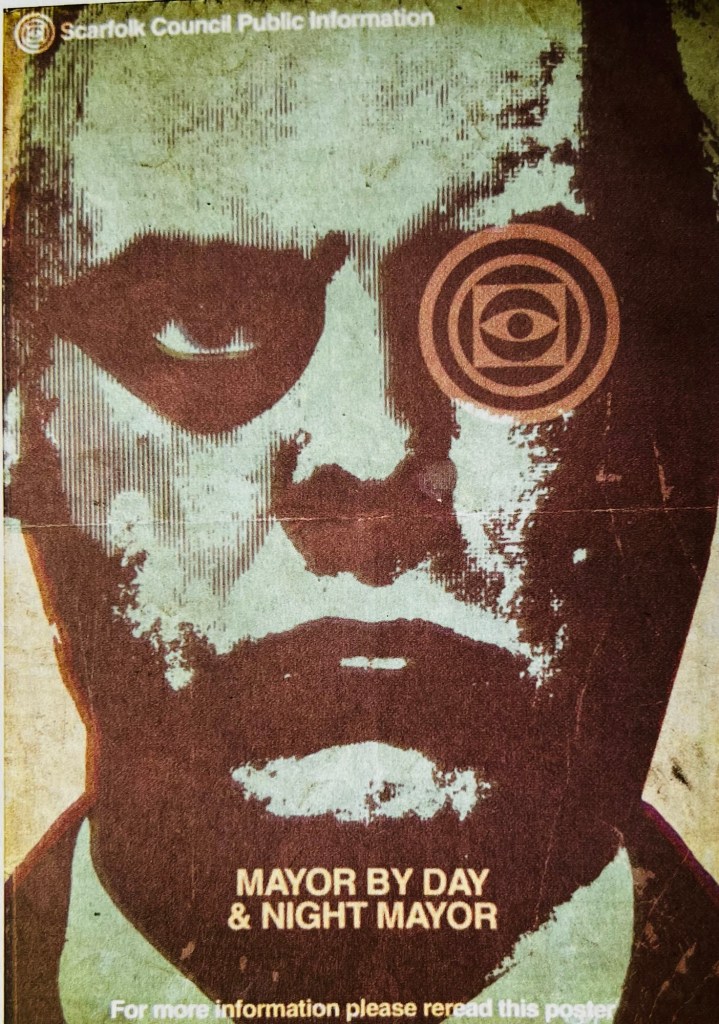
The emergence of the internet has seen the near death of the public poster and I find that a great shame. This was the decade of political opportunism by radicals to express their views via lampposts, bus stops, the underground etc with hard-hitting designs and Littler takes this and runs with it.
What Littler has created is the notion of a small town in which there is no escape from its dystopian governance. He draws on the macabre history of the era of 1970s television and books with a notable nod to Orwell and Ballard.
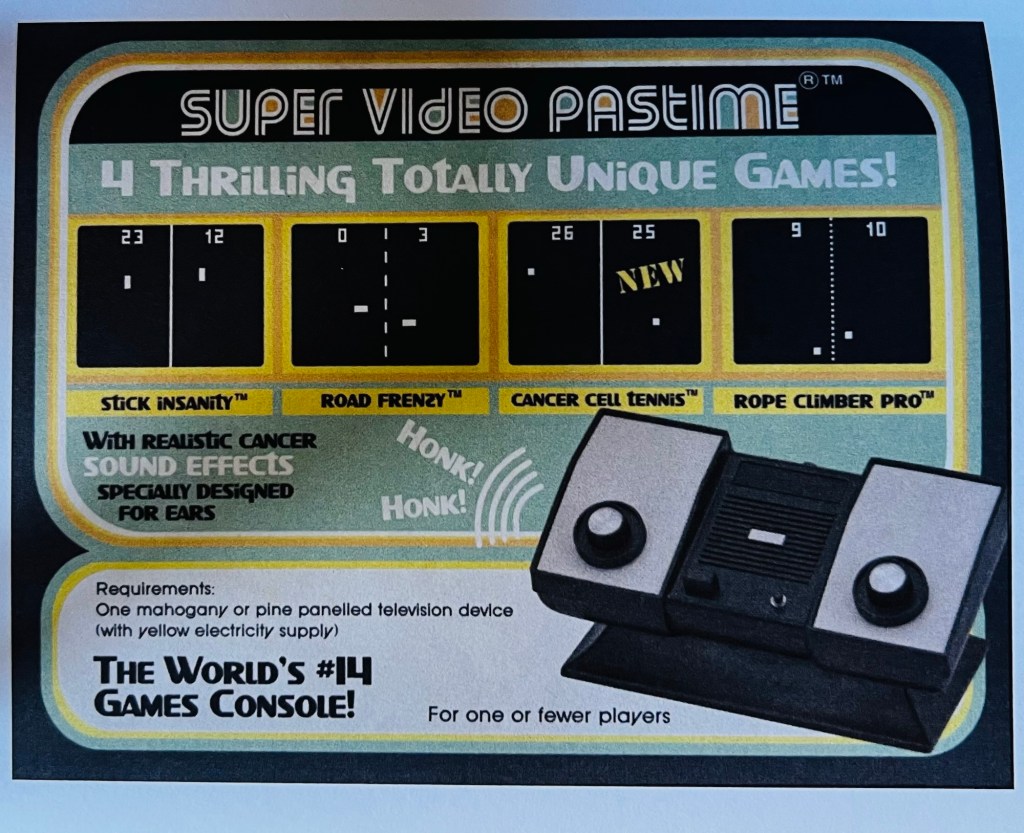
Each pictorial artefact covers every day life from going to school, shopping, music, work life and religion to radical views on social issues such as race and gender. This book grew out of a blog and subsequent social media presence and sits well alongside any book on folklore, hauntology or psychogeography.
Categories: British History and Folklore, The Reading Room, Uncategorized


 retroculturati