



‘Sauntering at ease I often love to lean
Oer old bridge walls and mark the flood below
Whose ripples through the weeds of oily green
Like happy travellers mutter as they go
And mark the sunshine dancing on the arch
Time keeping to the merry waves beneath
And on the banks see drooping blossoms parch
Thirsting for water in the days hot breath
Right glad of mud drops plashed upon their leaves
By cattle plunging from the steepy brink
While water flowers more than their share recieve
And revel to their very cups in drink
Just like the world some strive and fare but ill
While others riot and have plenty still’

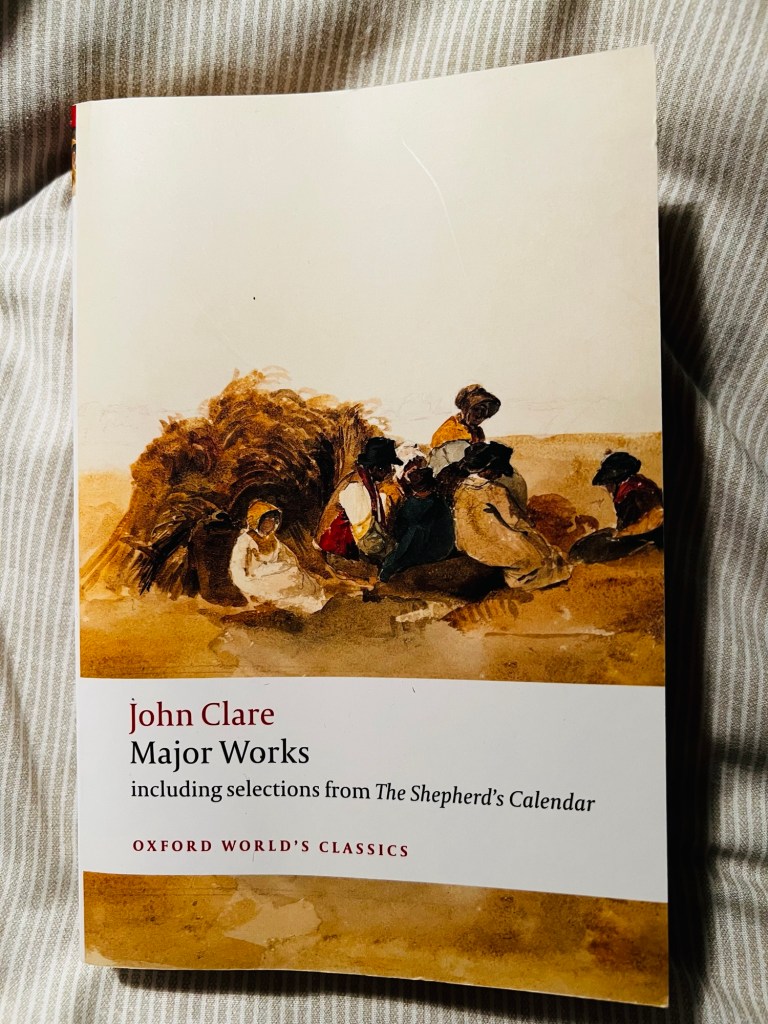
John Clare’s An Idle Hour was written during his well-documented Helpston Period. This was the time he spent writing passionately about nature and the landscape until his declining mental health got the better of him and he moved out of the village for Northborough in 1832. Five years later he would be sent to an asylum.
Clare’s poetic observations from this period are deeply relevant to this day, so keenly aware was he of the damage caused by the Enclosure Acts which saw the aggressive destruction of much of what he, the ‘peasant poet’ treasured. Clare observed the beginning of the slow death of the rural communities in England and the subsequent carving up of the countryside in which wealth took no prisoners.
I have always felt a deep connection to this poem, the countryside is the perfect place to pause a while and reflect and ask nature to help you make sense of it all. Clare got it and perhaps that proved the undoing of him.
Categories: Nature and Nature Writing, The Reading Room


 retroculturati