

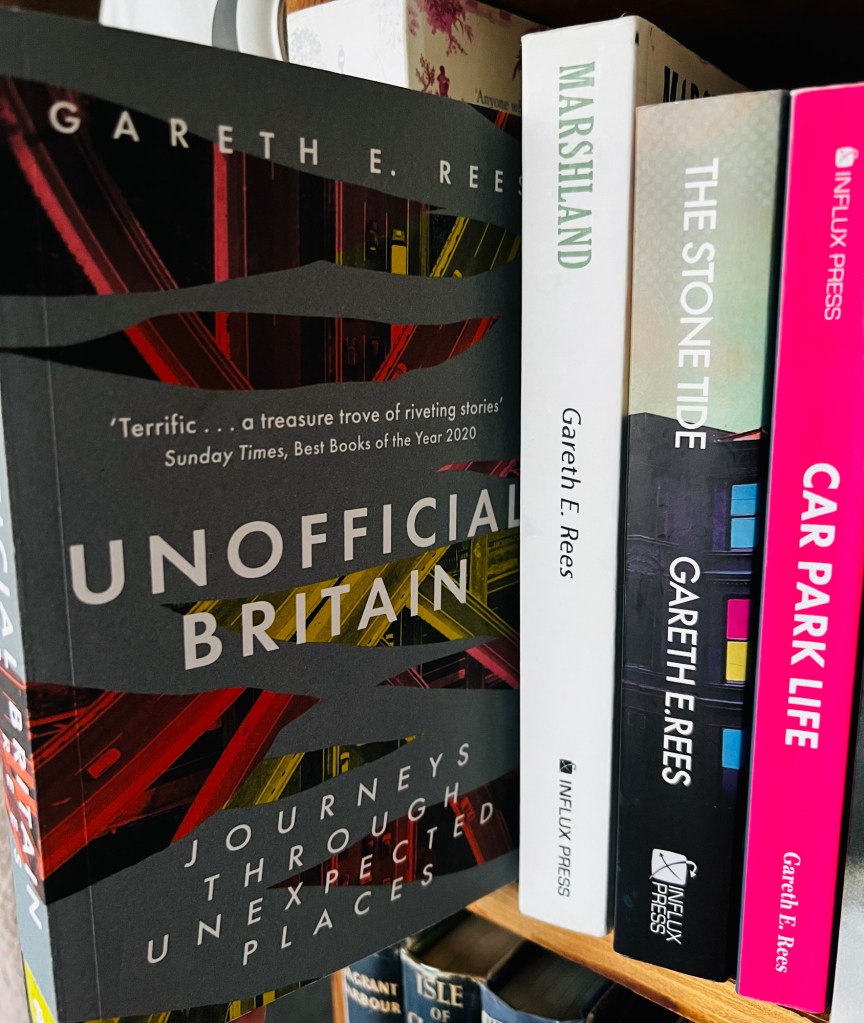
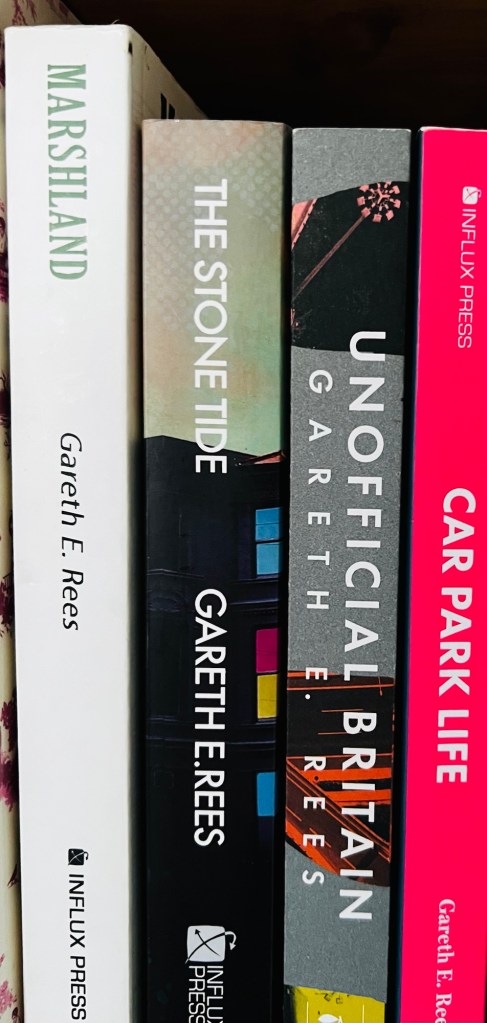
Unofficial Britain by Gareth E. Rees is one of my favourite go-to reads about modern Britain, its links to the past and all that lay beneath the surface of our towns and cities.
Rees is one of those authors you stumble on and feel genuinely thankful for it. He writes about subjects we unconsciously disregard, those places which at first glance, seem little more than soulless concrete places of abandon. But for Rees, like the great Iain Sinclair, he sees its past, its memories and its characters who gave us our modern day folklore.
Unofficial Britain is a book about margins, those familiar yet overlooked places which hold a million memories. The underpass, a pub car park, the housing estate, the derelict petrol station which hosted a thousand rendezvous. How many of us can recall a memory in such an innocuous place? These were the places many of us went in our youth for adventure or simple escape.
Yet increasingly, these places are becoming less appealing to an insular generation and those edgelands, once the strip between the boundary of a town and a major road have almost completely switched. As the town centres become ever more obsolete with the margins now hosting designer outlets and superstores so those living on the margins are inhabiting the centres.
And what of the eccentrics who once held a special, unique place in society. Those who, without clear reason seemed to survive, indeed thrive on living an alternate lifestyle, unburdened by the pressures of modern life. Life’s chancers with a thousand stories to tell, the authors of modern folklore.
Rees takes us back to such times, to one such character, Robin Furman, the Grimsby Ghostbuster who, along with his dog and small team, exorcised houses said to be hunted by poltergeists. A popular local figure who enjoyed a snapshot of national fame before fading into local legend. We mocked him and his like but we all missed the point and Rees reminds us of our folly.
Rees has written about the most unlikely of subjects, how he ‘sold’ his idea of a book on car parks to a publisher would seem, at first glance, a remarkable achievement but he makes sense of the most innocuous places, bringing a new perspective to urban dwellings and a nod to the memories long since faded into the concrete.
Further reading:
Categories: British History and Folklore


 retroculturati