

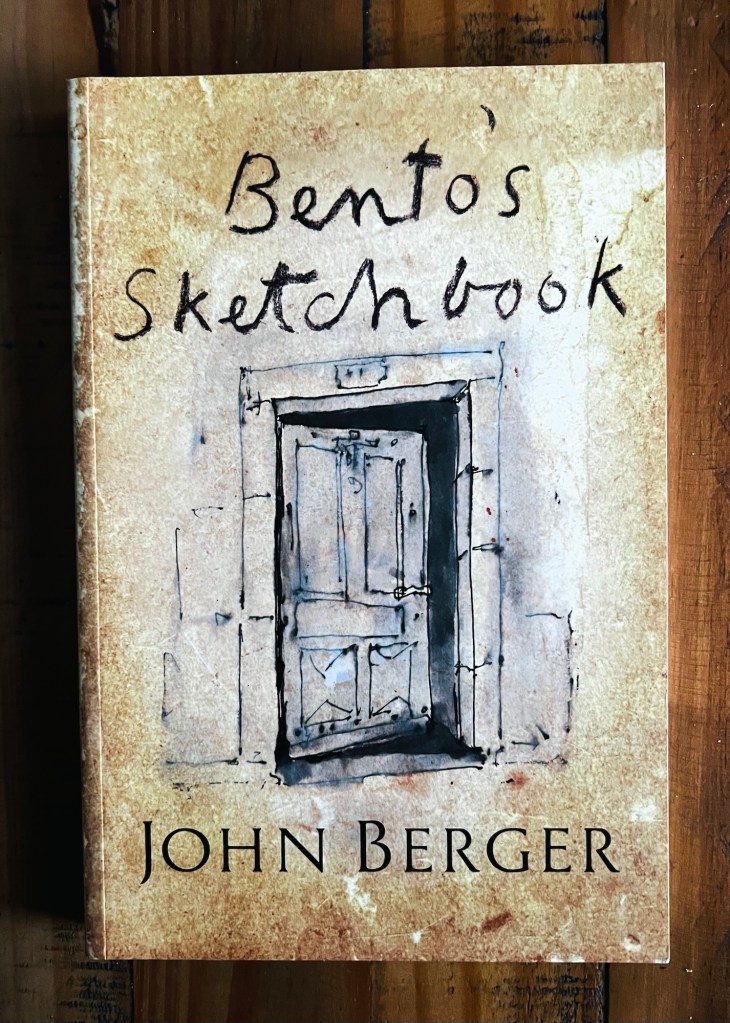
In 2011, the writer John Berger (1926-2017) published Bento’s Sketchbook, a wonderfully imaginative look at the life of the seventeenth century philosopher Baruch Spinoza.
Berger was a man of many colours; art critic, painter, novelist, free-thinker and poet, his connection to Spinoza feels instinctive as he crafts the story of the philosopher into his own space of art, politics and storytelling.
Spinoza was a hugely controversial figure, his writing caused scandal to the point of being made ‘by the Devil, himself’. He rejected the notion of a God of any kind, dismissed the belief in miracles and advocated for a secular society in which humans could be relied upon to behave in a manner which did not require the threat of hell in the afterlife to live in a society which was fair and democratic. The bible, he insisted, was nothing more than a man made fiction designed to control the masses in favour of the few.
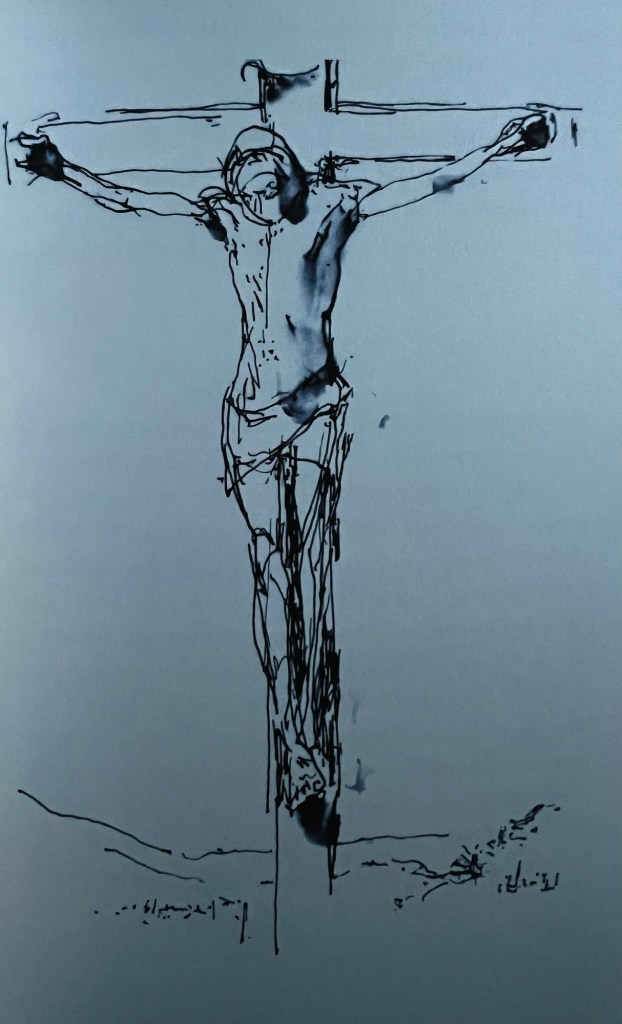
Spinoza wrote feverishly within a short period before his sudden death and he was also known to sketch although none of his sketch books were ever found. In his book, Berger, who had long imagined finding Bento’s sketches alongside his writings, weaves his own artwork alongside musings on Spinoza and the connection between the thinker and the artist.
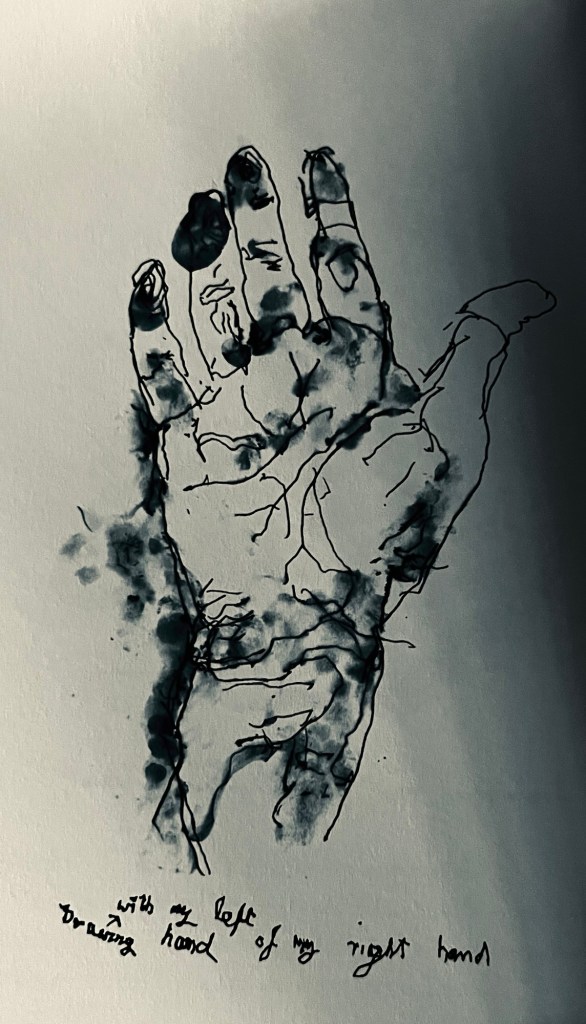
Berger’s drawings give the sense of a man in his twilight years whose inked lines are driven by deep thoughts and emotions. Perhaps no more so than in his portrait of the actress Tilda Swinton, in whose wonderful documentary of Berger, The Seasons in Quincy, Four Portraits of John Berger, he is filmed sketching her at his kitchen table.
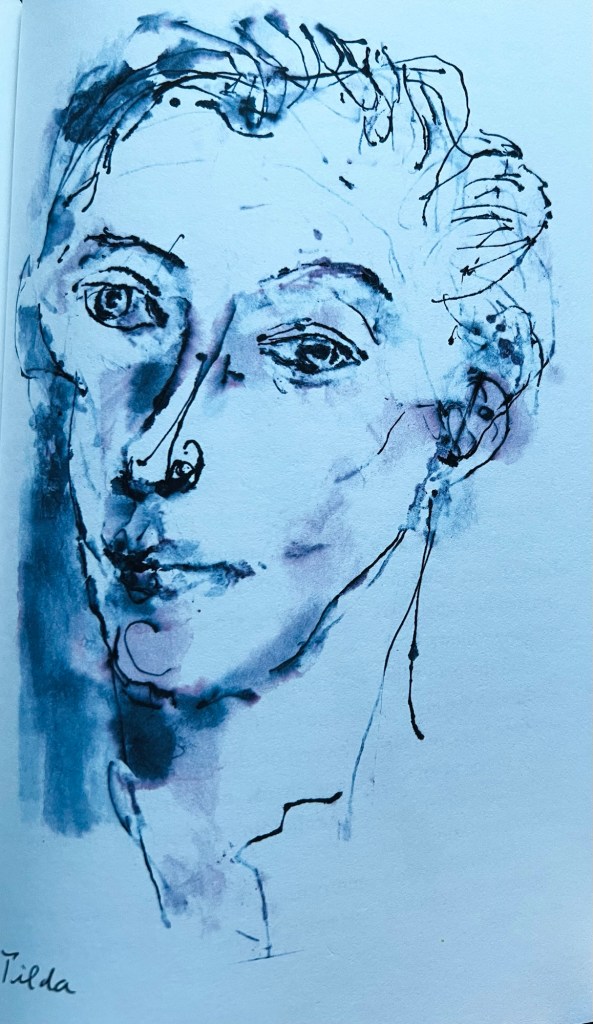
Spinoza’s writing runs through the book with a series of extracts from Ethics and Treatise on the Correction of the Intellect, both published after his death and the intensity of thought and observation can perhaps, only be equalled by Berger himself.

Berger was the master of observation, not only of art but of human instinct. He could detail the smallest of habits, from the coring of an apple, to the objects on a side table or the people inside a supermarket. Nothing seemed to escape his notice or its potential for a backstory or life lesson.
The drawing of the bicycle relates to story of his friend Luca, Berger hooks the reader in with his account of an ordinary man’s life, flecked with minor details which paints a wider portrait. Luca’s bike is sixty years old, he worked all of his life to see his savings vanish in the coffers of a nursing home for his wife slowly dying of Alzheimer’s. Berger sees beauty and tragedy in simplicity, his drawing of Luca’s bike produced an unexpected reaction from me as I thought about this stranger whose life goal, like mine, was to retire and live quietly and modestly until that dream was crushed by the reality of this fragile world.

The inspiration for the book came via a friend of Berger’s, a Polish printer who lived in Bavaria and gave the author a virgin sketchbook covered with suede leather. Berger immediately named it Bento’s Sketchbook and so these drawings were born.
Like most of his books, there is something for everyone within its pages. Berger’s themes and endearing stories mix effortlessly with his sketches and the life and writing of Spinoza.
Further reading:
John Berger’s Self Portrait 1914-18
Categories: Artists and Art Books, The Reading Room


