



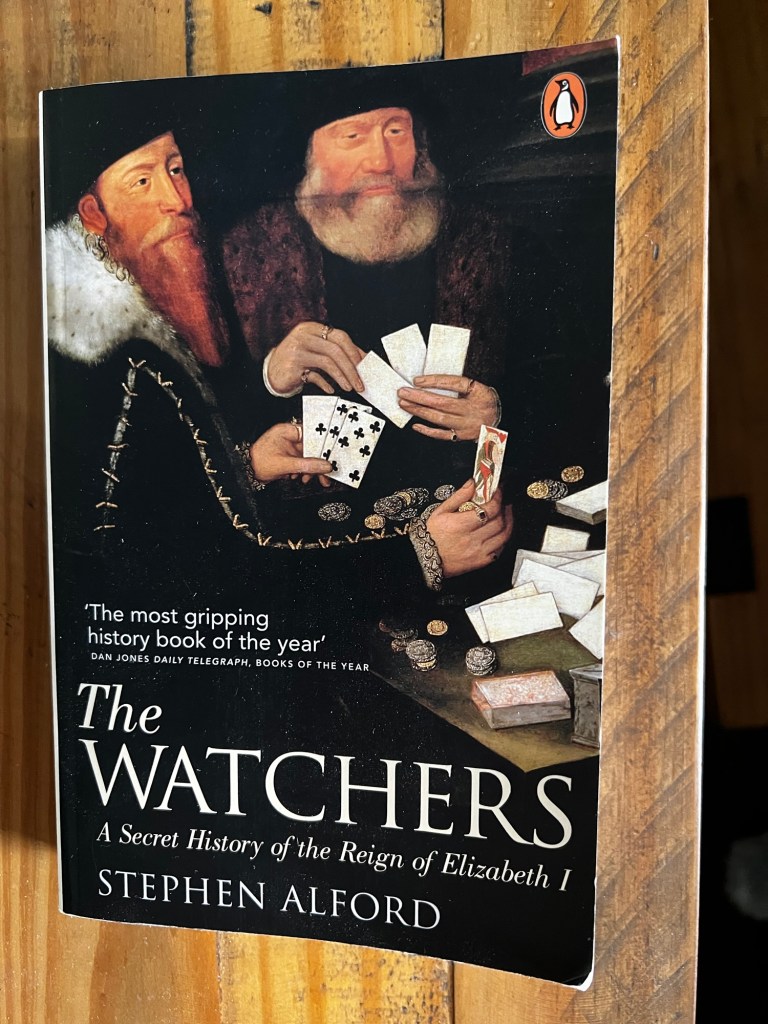
Here’s one that stuck out as I perused the shelves of my local bookshop: Stephen Alford’s The Watchers, published in 2012, studies the shadowy, political dark arts of Elizabethan England, showcasing the forms of espionage that safeguarded the reign of Queen Elizabeth Ist, The depth of research is plain to see; from intercepted letters, secret codes to clandestine reports—Alford shows us a country in crisis, where loyalty good turn on a coin.
The ‘Watchers’ were the spies, informers, and intelligence officers ran by men such as Sir Francis Walsingham and William Cecil, who developed intelligence services to bust Catholic plots, assassination attempts, and foreign invasions using whatever means they deemed necessary, a view that has seemingly held ever since.
The book covers Queen Elizabeth’s 45-year reign, a period seldom without controversy and Alford takes the reader through key events such as the Throckmorton Plot of 1583, a plot by Catholic nobles and Spanish spies to overthrow the queen, and the Babington Plot of 1586, which would decide the fate of Mary, Queen of Scots.
Alford tells of letters written with invisible ink; torturers extracting confessions and forged evidence to convict suspects. He tells how more than one hundred Catholic priests were executed as traitors with the help of laws changed to accommodate their supposed guilt. The depth of intrigue was considerable, from hidden luggage compartments, to spy networks stretching from London taverns to European cities.
This is a book more akin to the pace of a spy thriller than an academic study for the purists. Alford is clearly across the brief and manages to condense large historical accounts into a manageable narrative which shows how, at its core, espionage has barely changed. Whilst spying and political intrigue was a practice carried out by generations before, this felt surprisingly intense to me.
Categories: British History and Folklore, The Reading Room


