



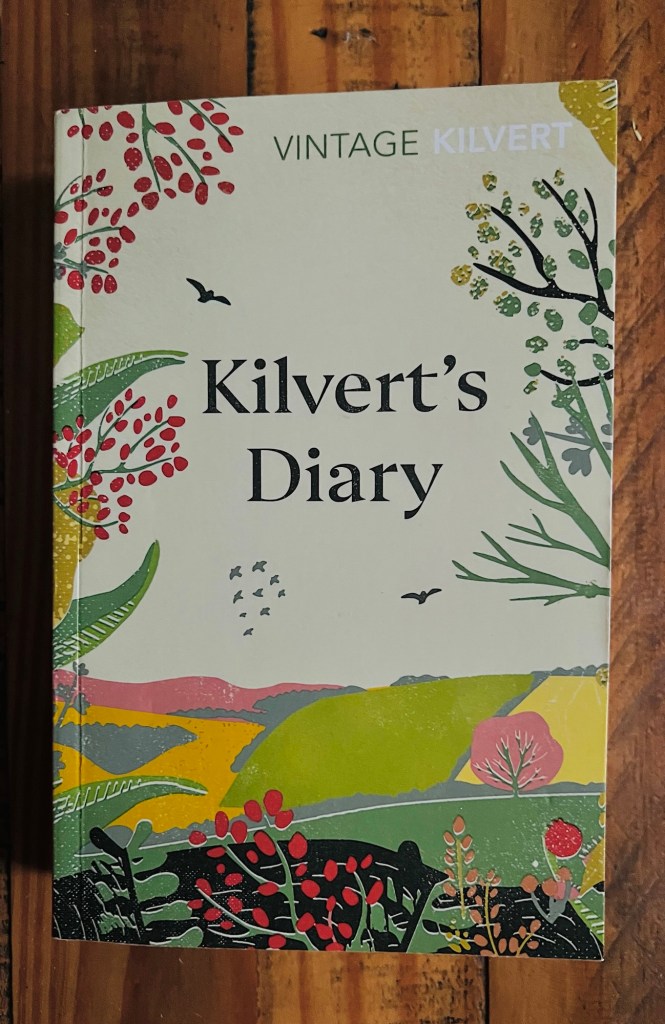
I came to Francis Kilvert via the books of Ronald Blythe. Like Blythe but long before him, Kilvert was a clergyman who wrote about the English countryside, its people and the changing seasons in a wonderfully evocative way.
Born in Wiltshire in 1840, he began his first diary aged thirty and wrote fastidiously about his life for nine years until his death from peritonitis. Sixty years later, what was left of his writings and subsequently the property of the publisher, Jonathan Cape were ‘unearthed’ by William Plomer and published in three volumes between 1938 and 1940.
The diaries were records of everyday rural life, a keen observer of people, nature and landscape which made for an important account of English life at that time. That he gives a voice to those who lived at the lower end of the social ladder and usually overlooked in historical documentation is to the credit of the diarist who, otherwise cuts a controversial figure in modern times.
Prior to reading this, I was unaware of a darker side to Kilvert, and whilst I am usually quite capable of understanding context and changes in attitude and behaviour throughout history, this felt at best, unpleasant and disconcerting.
What does become apparent is his fondness for the opposite sex and in particular, young girls. He was, by all accounts, sexually repressed for much of his life but it feels unlikely that he did not carry out to some degree at least, sexual assaults on minors.
In his introduction to this edition in 2019, Mark Bostridge does his best to offer a balanced view of Kilvert and his actions and how they might be perceived today. He states that Kilvert was probably celibate until his marriage which may be true but in no way lessens the fact Kilvert writes of a long kiss with a seven year old. Nor does it excuse his undoubted interest in the flagellation of young girls and his observations of seeing them barely dressed or naked on a beach or at the home of a friend or relative.
What we are left with is a vision of a repressed man caught between his religion and his carnal wants and I am left feeling devoid of both sympathy and admiration. My earlier comparison to Ronald Blythe starts and ends at both being religious and diarists and perhaps Blythe was able to see past Kilvert’s obsession but I couldn’t. The great shame isn’t the tainting of his work as a writer but that young children, as so often is the case, were the victims of man’s weakness and depravity.
Categories: Nature and Nature Writing


