

I have long been a fan of the political cartoon. That art form which skewers those so desperate for us to take them seriously with wince-making accuracy has long held our leaders to some degree of account.
The decline of traditional media has many casualties and few can seriously argue that mainstream newspapers still wield influence over the public and as a result, the art of the political cartoonist has seen the back of its glory days.
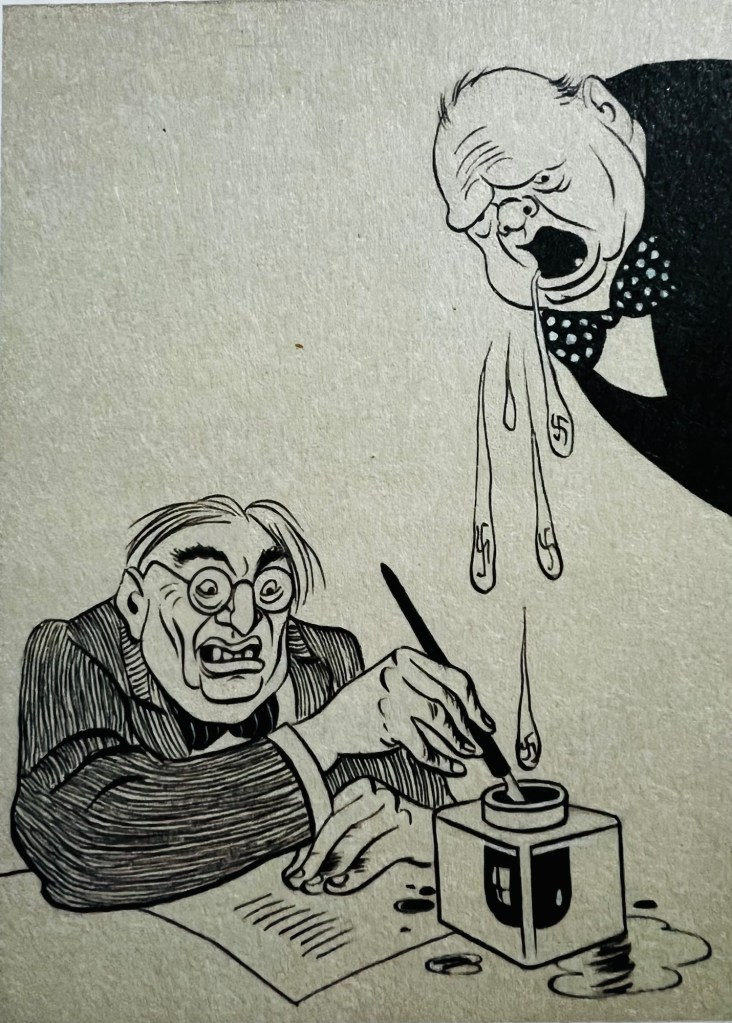
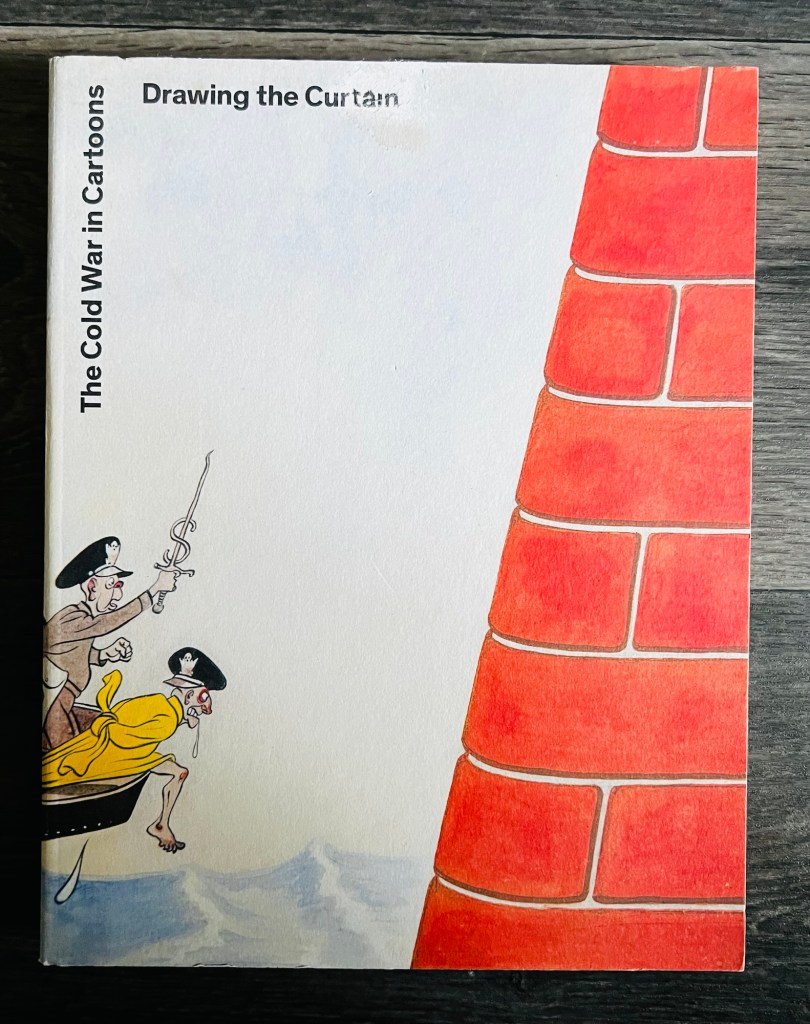
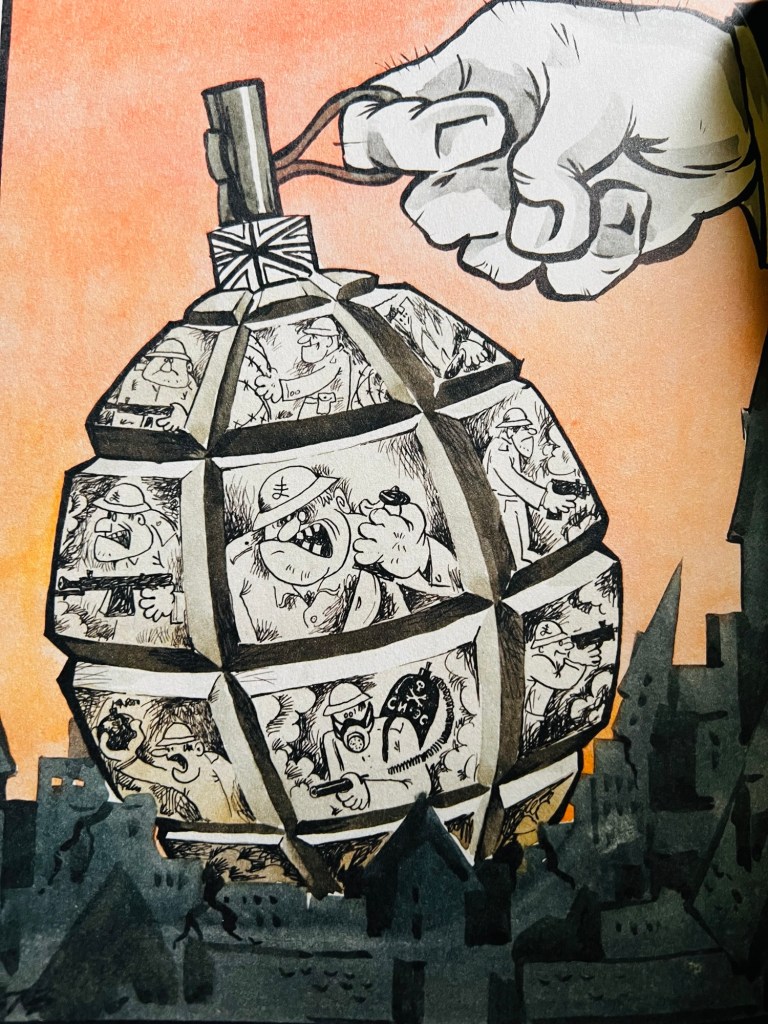
Drawing the Iron Curtain-The Cold War in Cartoons is a remarkable collection of cartoons from both sides of the Cold War. From its post WW2 founding to its collapse, the orchestrators of this barbaric period are rightly ridiculed for their part in this often terrifying farce.
The Cold War was a battle of hearts and minds as well as well as an arms and space race and many of these cartoonists were employed to ridicule the other side to deflect the reality of their own failings.
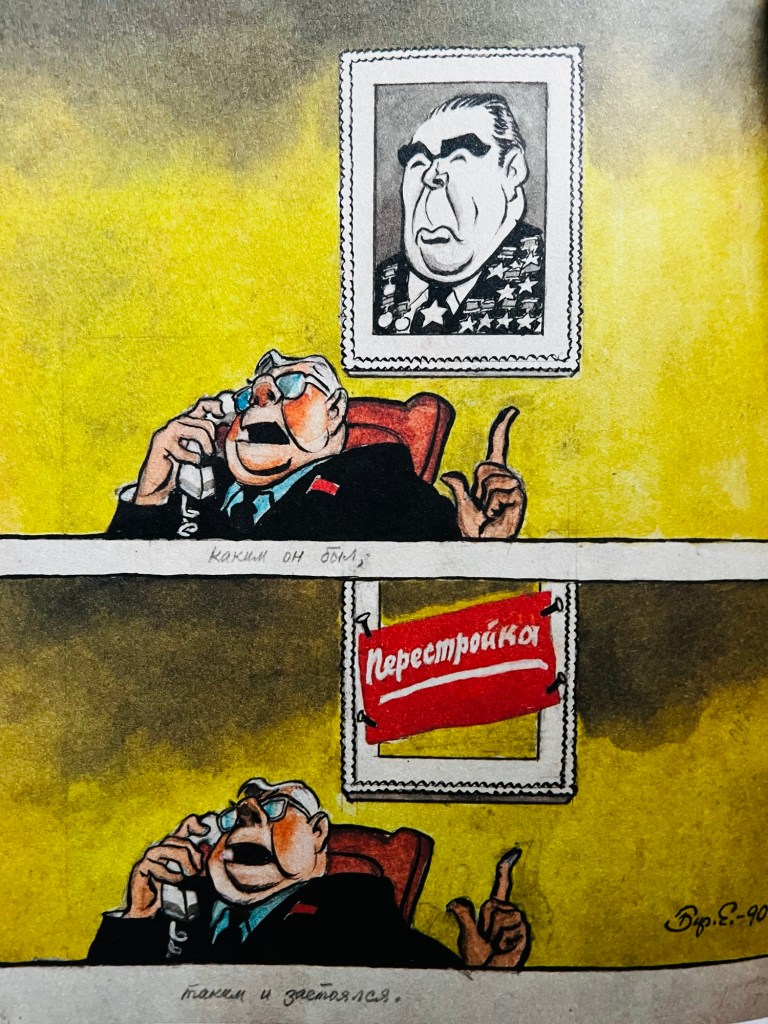
The most famous of the Soviet Union’s cartoonists was Boris Efimov, his career spanned the entirety of the Cold War and he lived to a remarkable 108 years of age. Admired by Stalin, he later remarked that not all of his work was to his own personal taste or viewpoint.
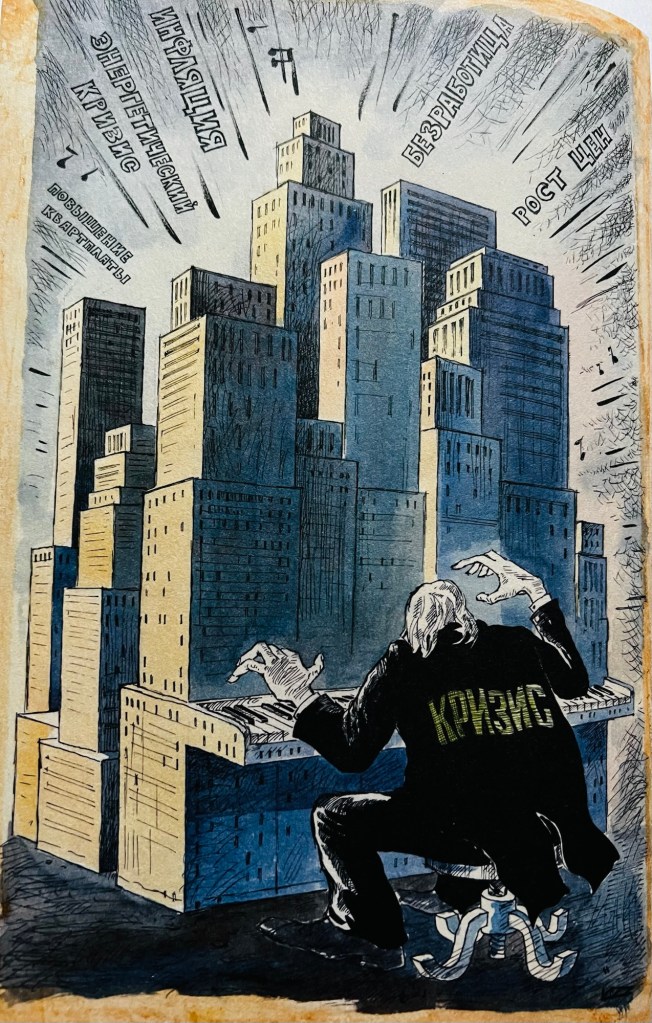
Efimov was acutely aware of how the Communist Party controlled the media narrative and the importance of propaganda to impress upon the people how much better life under Stalin et al was than their Western counterparts. Some job. The main outlets for this was Krokodil, Pravda and Izvestia and their depictions of Western leaders pulled few punches, the artists doubtless petrified to paint them in any other way.
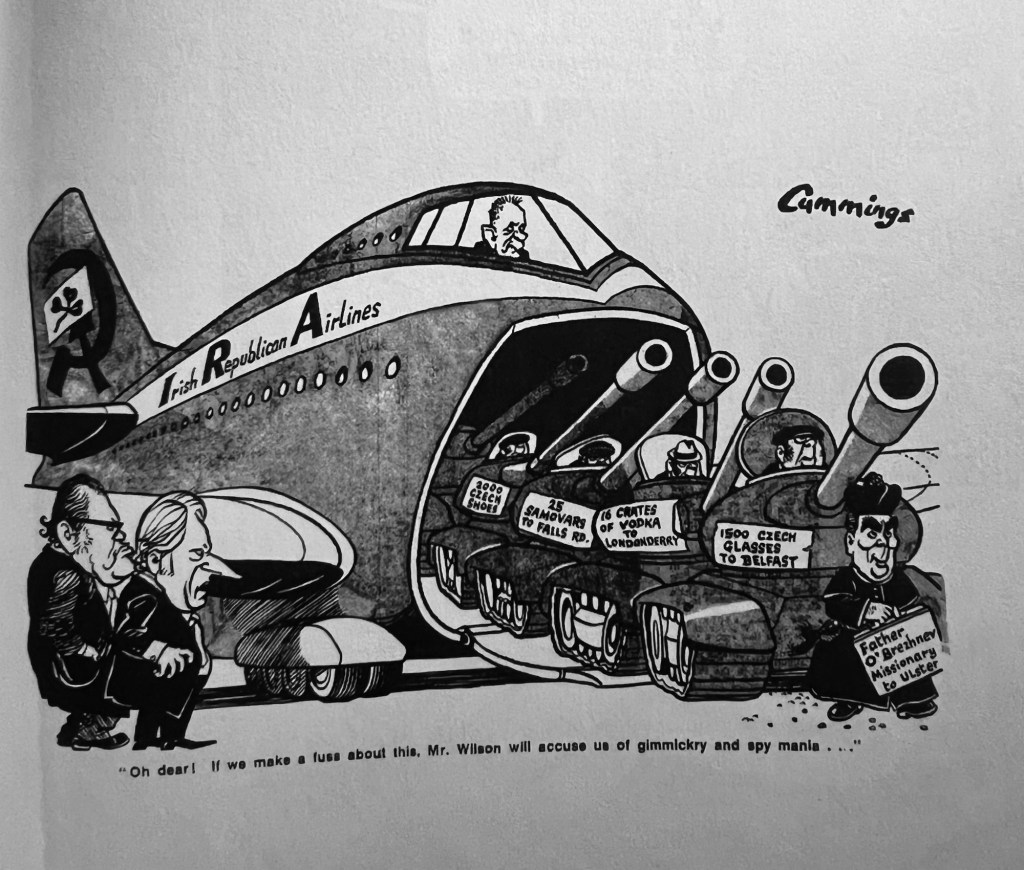
Both sides seized every opportunity to depict the other as the aggressor, in the 1970s the Soviet media would regularly highlight the situation in Northern Ireland to criticise the British whilst the Pentagon were accused of exaggerating the threat of the Soviets to bolster their own military funding.
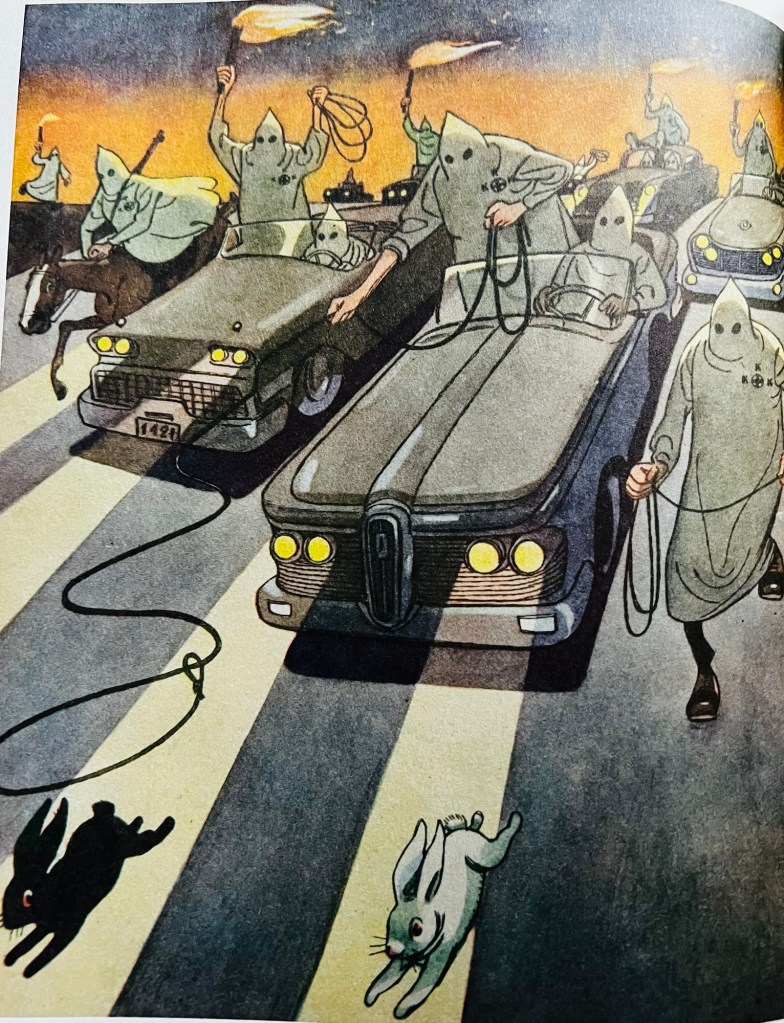
This book is a treasure chest of information, for anyone interested in the Cold War period I would suggest this is an important addition to their collection. The term cartoon does not do the artwork and its importance to historical record justice and whilst the artists were working to a state controlled narrative on both sides, there is still much to admire.
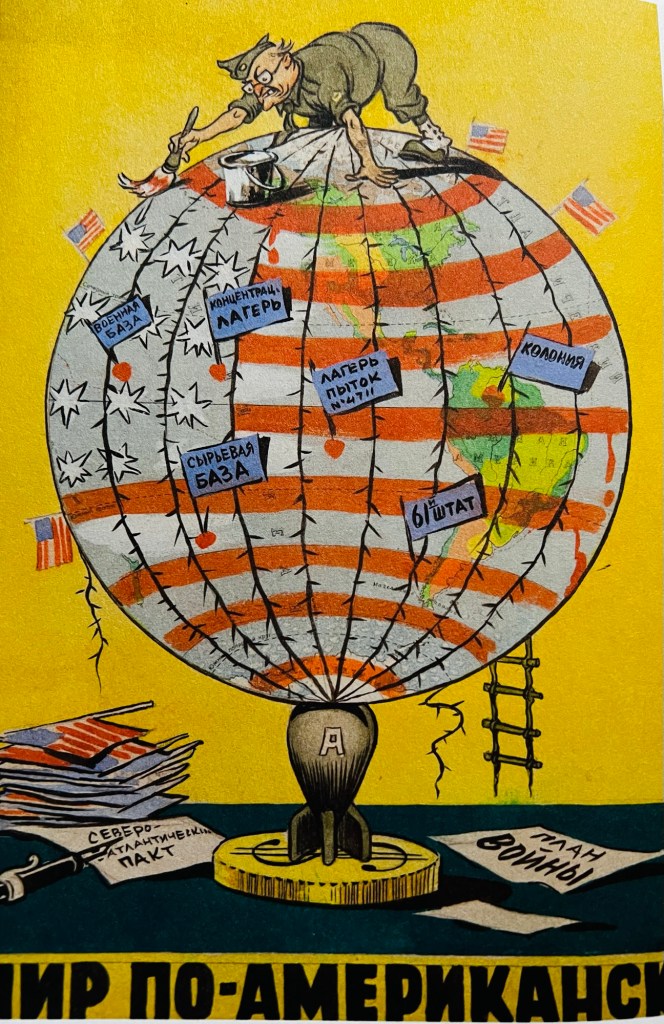
How interesting it is to consider this media format in a time when the internet has blown apart the traditional newspaper and television channels with the public getting their news from multiple independent sources and with it, one would hope, the chance to form a balanced view. From a purely artistic perspective this has proven to be the slow and painful death of the political cartoonist and that is a great shame. What records will we have of these times save for a tweet or hashtag?
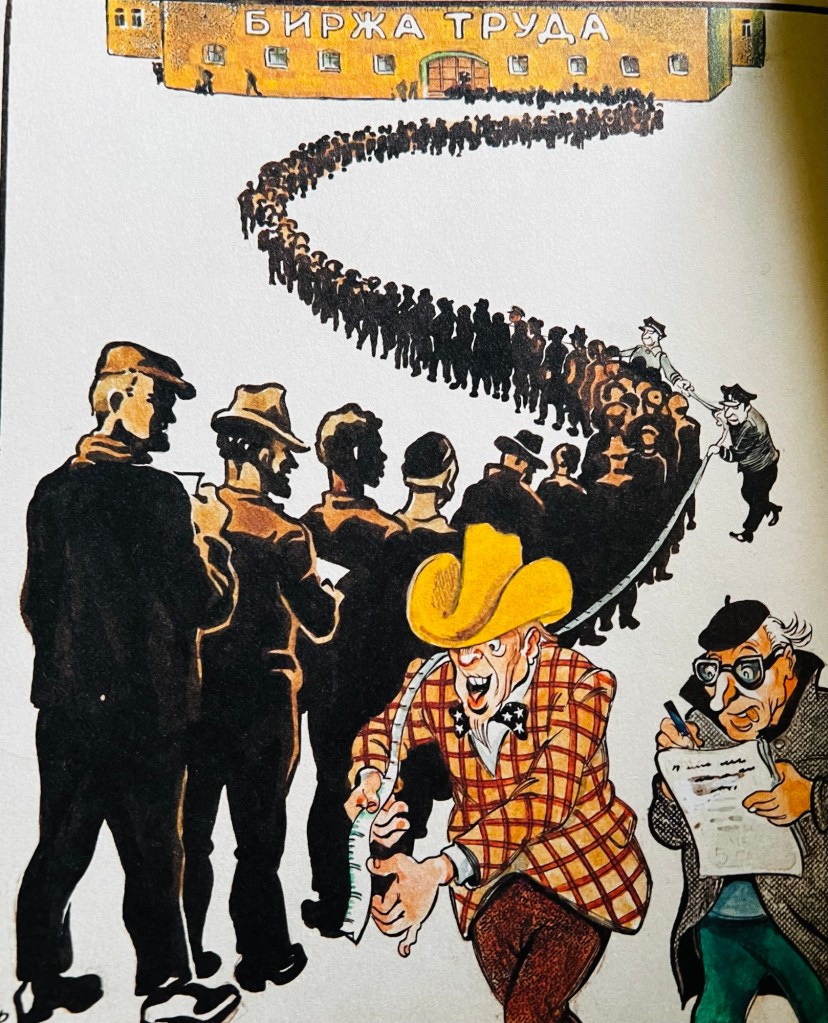
What this book achieves is not only the recording of these brilliant artists but, importantly, the reminder of the troubled times and the real threat each side posed not only to the other but to their own people too. Many would question what lessons have been learnt since the end of the Cold War and these artists remind us of the absurdity of our political leaders regardless of the times.
Further reading
Political Cartoons of the 20th Century
The Oral History of the Cold War
Music and Footage of Cold War Berlin
Categories: Artists and Art Books, Reportage, The Reading Room


